Canada Hunting Tag and Seal Requirements 2026–2027: Complete Provincial Guide
For the 2026–2027 hunting year, Canada does not use one national hunting tag or seal system. Each province and territory controls most resident and big-game licensing, while the federal government regulates migratory birds. Depending on the jurisdiction and species, a hunter may need a base license, wildlife identification number, species license, draw authorization, validation sticker, physical tag, transportation coupon, seal, compulsory inspection, or harvest report. The correct order is usually: confirm residency and training requirements, obtain the hunting license, secure any species authorization or draw allocation, carry the issued document while hunting, attach or activate the tag or seal exactly as instructed, and complete post-harvest reporting.
The most important 2026–2027 rule is simple: do not assume that a license automatically includes a tag or seal. Alberta, British Columbia, Manitoba, New Brunswick, Newfoundland and Labrador, Nova Scotia, Ontario, Prince Edward Island, Quebec, Saskatchewan, Northwest Territories, Nunavut and Yukon all use different terminology and procedures. Some rely on electronic records, while others still issue physical tags, seals, stickers, coupons or registration documents. This guide explains the practical difference so you can prepare before travelling, entering a draw or pursuing deer, moose, elk, bear, caribou, turkey, waterfowl or other regulated game.
Important: Regulations, quotas, fees, draw dates and reporting instructions may change during the license year. Always confirm the current annual regulation guide before hunting. The applicable statute and current government guide override any general explanation in this article.
Before you apply for any tag, make sure you understand the rules of access — read our detailed breakdown of hunting on private land and permission laws by province.
License, tag, seal and validation: what each term means
Hunters often use these words interchangeably, but they perform different legal functions.
| Term | Practical meaning | Common mistake |
|---|---|---|
| Base hunting license | Gives a person general authority to hunt within a jurisdiction, subject to species and season rules | Believing it authorizes every species |
| Species license | Authorizes hunting of a specific animal, such as moose, deer, elk or bear | Forgetting that a species license may be separate from the base license |
| Tag | A paper, electronic or printed authorization linked to a species, animal type, sex, area or quota | Treating a tag as transferable |
| Seal | A physical locking or identifying device attached to harvested wildlife | Attaching it late or losing it without following replacement rules |
| Validation sticker/certificate | Confirms that a license is valid for a particular hunt, animal or season | Altering, copying or using another hunter’s validation |
| Transportation coupon | A license component used to identify or transport harvested wildlife | Leaving it unattached during transport |
| Draw allocation | A limited opportunity awarded through a lottery or priority system | Confusing a successful draw with a completed hunting license |
| Registration or inspection | A required post-harvest process, sometimes involving a check station, office, phone or online report | Assuming a tag replaces mandatory reporting |
A useful distinction is that the license authorizes the hunter, while the tag, seal or validation usually authorizes or identifies the specific harvest.
For hunters travelling between provinces, the broader licensing process is explained in this bold Canada hunting license by province guide. However, species-specific tag rules still require the applicable annual government regulations.
Canada-wide requirements before buying any tag
Most hunters should complete this checklist before applying for a license or booking an outfitter:
- Confirm whether you are a resident, Canadian non-resident or non-resident alien.
- Check the minimum age for the species and hunting method.
- Complete the required hunter education, firearms safety or bowhunter training.
- Obtain the jurisdiction’s hunter number, wildlife identification number or online account.
- Review the current season dates, wildlife management unit, game hunting area or zone.
- Determine whether the opportunity is:
- over the counter;
- limited-entry;
- draw-based;
- outfitter-controlled;
- resident-only; or
- subject to special authorization.
- Confirm whether the animal requires:
- a physical tag;
- a locking seal;
- a validation certificate;
- a transportation coupon;
- a registration number; or
- an online harvest report.
- Carry your license and any required tag while hunting.
- Do not lend, copy, alter, detach or transfer another hunter’s authorization.
- Record the date, location, species, sex and animal identification details immediately after harvest.
- Keep evidence of purchase, draw success and reporting confirmation.
Province-by-province hunting tag and seal requirements
1. Alberta
Alberta generally separates the Wildlife Certificate, the species hunting license and certain special authorizations. Hunters normally need a valid wildlife identification number, wildlife certificate and applicable license before hunting regulated game.
| Requirement | Alberta 2026–2027 practical explanation |
|---|---|
| Tag or species authorization | A species license is required for the applicable big-game animal. Special licenses, undersubscribed opportunities and draw authorizations may apply |
| Seal requirement | Alberta commonly uses species license documentation and harvest tags rather than one universal seal system. Confirm whether the current license is electronic, paper or requires a physical tag |
| Draw | Limited-entry hunting opportunities use the Alberta draw system. A successful draw does not replace the need to purchase and carry the required license |
| After harvest | Follow the current Alberta guide for tag attachment, evidence-of-sex requirements, transportation and any species-specific reporting |
| Key warning | Do not hunt with only a wildlife certificate; it is not the same as a species license |
Before leaving for the field, verify the animal, WMU, season code and license conditions. Alberta rules can differ significantly between general and special hunting licenses.
2. British Columbia
British Columbia uses a basic hunting license plus species licenses for many regulated animals. Species licenses are important because they can identify the animal, region, season, sex or quota under which the hunter may act.
| Requirement | British Columbia 2026–2027 practical explanation |
|---|---|
| Tag or species authorization | A species license may be required in addition to the basic hunting license for animals such as deer, elk, moose, caribou, black bear, mountain goat and others |
| Seal requirement | Species licenses are issued on official paper and may need to be carried. A separate physical tag or evidence requirement can apply depending on the species |
| Draw | Limited Entry Hunting authorizations are separate from ordinary license purchases |
| After harvest | Certain species and locations require compulsory inspection or mandatory reporting. Elk, moose and caribou have especially important reporting and inspection rules |
| Key warning | Do not assume a digital basic license is enough when the species license must be physically carried |
British Columbia also uses management regions and units. Read the species license conditions carefully because the tag may limit the animal’s sex, age, area or season.
3. Manitoba
Manitoba’s licensing system uses licenses, game tags, seals and, for certain hunts, draw or allocation procedures. Big-game hunters should pay close attention to the relationship between the license and the issued tag or seal.
| Requirement | Manitoba 2026–2027 practical explanation |
|---|---|
| Tag or species authorization | A species-specific license and applicable game tag may be required for deer, moose, elk, black bear, caribou or other regulated game |
| Seal requirement | A tag, seal or shipping coupon may be required, depending on the animal and regulation. Use only the authorization issued for your license |
| Draw | Some big-game opportunities and special seasons use draws, allocations or outfitter-linked licenses |
| After harvest | Follow the current hunting guide for attaching the tag or seal, transporting meat and completing registration or reporting |
| Key warning | Using another person’s tag, seal or shipping coupon is not a lawful substitute for your own authorization |
Manitoba also has different rules for Canadian residents, non-residents and non-resident aliens. Some non-resident big-game hunts require an outfitter or guide, so confirm that requirement before paying for travel or accommodation.
4. New Brunswick
New Brunswick uses hunting licenses, deer validation stickers, species-specific authorizations and draw systems. Deer and moose preparation requires extra care because license eligibility and validation can be separate steps.
| Requirement | New Brunswick 2026–2027 practical explanation |
|---|---|
| Tag or species authorization | Hunters need the appropriate game license. Deer opportunities can involve an antlered deer license and, where available, an antlerless validation sticker |
| Seal requirement | New Brunswick’s rules use validation stickers and tagging requirements rather than one universal big-game seal for every species |
| Draw | Antlerless deer and moose opportunities may involve a draw, zone allocation or resident-only process |
| After harvest | Attach or use the required validation in the prescribed manner and complete any registration, transportation or reporting requirement |
| Key warning | A successful draw or validation award does not remove the need to carry the underlying hunting license |
Hunters should check the exact wildlife management zone and animal category. An antlerless validation is not interchangeable with an antlered deer authorization.
5. Newfoundland and Labrador
Newfoundland and Labrador uses a structured big-game license and draw process, especially for moose and caribou. The 2026–2027 hunting and trapping guide should be treated as the controlling seasonal reference.
| Requirement | Newfoundland and Labrador 2026–2027 practical explanation |
|---|---|
| Tag or species authorization | A big-game license identifies the species, area and quota awarded to the hunter |
| Seal requirement | Tagging, license coupons or physical identification requirements may apply after harvest. Confirm the instructions issued with the license |
| Draw | Big-game applications and draw results are central to moose and caribou hunting. A draw award is not the same as a completed license |
| After harvest | Follow the current guide for harvest reporting, animal identification, evidence of sex, transportation and any biological samples |
| Key warning | Non-resident big-game hunting may require an outfitter, guide or other approved arrangement |
Because Newfoundland and Labrador contains separate island and Labrador hunting contexts, the area printed on the license matters. Do not rely on a general season summary without checking the specific management area.
6. Nova Scotia
Nova Scotia uses hunting licenses, stamps, validation documents and registration procedures. Deer and bear hunters should check whether the current season requires a physical document, office-issued item or online record.
| Requirement | Nova Scotia 2026–2027 practical explanation |
|---|---|
| Tag or species authorization | Deer, bear, small game and other opportunities use separate licenses or stamps depending on the species |
| Seal requirement | Nova Scotia may require physical deer or bear-related tagging, registration or seals. Bear gallbladder seals have separate handling requirements |
| Draw | Moose hunting is strongly associated with a limited-entry draw and assigned opportunity |
| After harvest | Deer and other regulated animals may require registration, reporting or a prescribed physical tag |
| Key warning | A digital purchase receipt may not replace a physical tag, stamp or seal where the regulation requires one |
Nova Scotia’s vendor and office procedures can differ by product. Buy early if a physical seal or registration item is required.
7. Ontario
Ontario distinguishes clearly between a hunting license and a tag that forms part of the license. Ontario also uses validation certificates, controlled hunts and mandatory hunter reports.
| Requirement | Ontario 2026–2027 practical explanation |
|---|---|
| Tag or species authorization | A tag can authorize hunting a particular species, animal type, sex, season or Wildlife Management Unit |
| Seal requirement | Ontario has moved away from some older physical seal practices. Current tags and validation certificates must remain intact, legible and unaltered |
| Draw | Moose, elk, controlled deer hunts, turkey and other opportunities may use draws, points or controlled-hunt applications |
| After harvest | Mandatory hunter reporting can apply to deer, black bear, wild turkey, wolf/coyote and moose, including some non-resident hunts |
| Key warning | Do not create duplicate tags, alter a validation certificate or assume a license summary alone proves tag validity |
Non-resident black bear and moose hunts can involve licensed operators or tourist outfitters. The validation certificate issued through that process should be protected and carried as directed.
Ontario hunters should also review the official bold 2026 Ontario hunting regulations summary before hunting because tag, reporting and WMU rules can change.
8. Prince Edward Island
Prince Edward Island has a relatively compact hunting system, but hunters still need to separate general license requirements from species-specific tags, stamps and season conditions.
| Requirement | Prince Edward Island 2026–2027 practical explanation |
|---|---|
| Tag or species authorization | Use the license and any species-specific authorization listed in the annual hunting summary |
| Seal requirement | Confirm whether the current deer or other game rules require a physical tag, validation or registration document |
| Draw | Limited opportunities may use application or draw procedures, depending on species and season |
| After harvest | Follow the annual summary for tagging, reporting, transportation and evidence-of-sex requirements |
| Key warning | Do not rely solely on an online payment confirmation if the regulation calls for a physical authorization |
PEI’s small size does not eliminate zone rules. Confirm the property, open season and permission requirements before hunting.
9. Quebec
Quebec uses a terminology system that may differ from the rest of Canada. Big-game hunters should understand the role of the transportation coupon, species license and, where applicable, draw or special authorization.
| Requirement | Quebec 2026–2027 practical explanation |
|---|---|
| Tag or species authorization | Hunters purchase the appropriate license for deer, moose, black bear, small game or wild turkey |
| Seal requirement | Quebec commonly relies on the license’s transportation coupon or related identification procedure rather than a single national-style seal |
| Draw | Antlerless deer, moose and special-area opportunities may be controlled by draw, zone or sector |
| After harvest | Use the transportation coupon as instructed, identify the harvested animal and comply with registration or reporting rules |
| Key warning | A transportation coupon is not merely travel paperwork; it can be a legal part of the harvest authorization |
Quebec’s rules may vary by zone, species, firearm and season. Hunters should check the French or English version of the current regulation guide and retain the license documents while transporting wildlife.
10. Saskatchewan
Saskatchewan uses the Hunting, Angling and Trapping License system, commonly known as HAL, alongside wildlife certificates, species licenses, harvest ledgers and big-game seals.
| Requirement | Saskatchewan 2026–2027 practical explanation |
|---|---|
| Tag or species authorization | Obtain the wildlife certificate and applicable species license through the HAL system or authorized issuer |
| Seal requirement | Big-game seals and harvest ledgers may need to be registered or activated with the license |
| Draw | Some licenses are issued through draws. Non-resident big-game hunts can require an outfitter and guided license |
| After harvest | Follow the current guide for seal attachment, harvest ledger use, replacement of lost or damaged items and any reporting requirement |
| Key warning | A registered seal that is lost, detached or destroyed must be handled through the official replacement process |
Saskatchewan specifically warns against using or carrying another person’s big-game license, seal or certificate. Hunters should also avoid creating duplicate HAL accounts.
11. Northwest Territories
The Northwest Territories generally separates the general hunting license from wildlife tags or species authorizations for certain big-game animals. Non-resident and non-resident alien rules can be more restrictive.
| Requirement | Northwest Territories 2026–2027 practical explanation |
|---|---|
| Tag or species authorization | Hunters may need a wildlife tag for each applicable big-game species in addition to the hunting license |
| Seal requirement | Use the tag or authorization issued for the species. Confirm whether the current rule requires attachment, presentation or registration after harvest |
| Draw | Some opportunities may be controlled by allocation, outfitter arrangements or area-specific authorization rather than a broad public draw |
| After harvest | Follow the current guide for harvest reporting, export, transportation and any mandatory biological information |
| Key warning | Remote hunting areas may have limited access to offices and communications; complete paperwork before departure |
Non-resident hunters should confirm outfitter requirements and harvest fees before booking flights, camps or aircraft.
12. Nunavut
Nunavut’s hunting requirements reflect local wildlife management systems, remote communities and species-specific authorizations. Big-game hunters should not assume that rules resemble those in southern provinces.
| Requirement | Nunavut 2026–2027 practical explanation |
|---|---|
| Tag or species authorization | A hunting license and any required species authorization or tag may be needed for big game |
| Seal requirement | Confirm the current Nunavut guide for whether the species uses a physical tag, seal, permit record or community-issued authorization |
| Draw | Access may depend on outfitter arrangements, local rules, harvest allocations or community and wildlife co-management requirements |
| After harvest | Follow the applicable reporting, transportation, export and inspection instructions |
| Key warning | Inuit and beneficiary harvesting rights can operate under different rules from recreational licensed hunting |
Nunavut hunters should obtain local advice before travel, particularly for caribou, muskox, polar bear and other species with strict conservation controls.
13. Yukon
Yukon requires a hunting license and uses species and area rules, harvest reporting and special authorizations. The territory places strong emphasis on reporting harvested big game.
| Requirement | Yukon 2026–2027 practical explanation |
|---|---|
| Tag or species authorization | A hunting license may be supplemented by a permit hunt authorization, registration hunt authorization or species-specific requirement |
| Seal requirement | Confirm the current guide for physical seals, license coupons or identification requirements for the species hunted |
| Draw | Permit Hunt Authorizations, threshold hunts and registration hunts control certain opportunities |
| After harvest | Big-game harvest reporting is required. Some species and areas have shorter deadlines |
| Key warning | Elk harvest reporting can be especially time-sensitive, including a 72-hour requirement in applicable circumstances |
Yukon hunters should check whether their hunt is a regular opportunity, permit hunt, threshold hunt or registration hunt. Each category can have different reporting deadlines.
Securing the correct tags and seals is a mandatory step before hunting any big game or migratory bird. To stay on top of deadlines, refer to our comprehensive list of hunting license renewal dates by province.
Cross-jurisdiction comparison
Which jurisdictions commonly use physical tags, seals or coupons?
| Jurisdiction | Physical document likely to matter | Main practical takeaway |
|---|---|---|
| Alberta | Species license, tag or harvest documentation | Verify the current format and WMU conditions |
| British Columbia | Species license and possible physical tag | Carry required species licenses; inspection and reporting may apply |
| Manitoba | Game tag, seal or shipping coupon | Never use another person’s tag or seal |
| New Brunswick | Validation sticker and species license | Antlered and antlerless deer authorizations differ |
| Newfoundland and Labrador | Big-game license and harvest identification | Draw success does not equal completed licensing |
| Nova Scotia | Physical license, stamp, tag or seal in some cases | Office or vendor availability can matter |
| Ontario | Tag, validation certificate or digital record | Keep tags intact and complete mandatory reports |
| Prince Edward Island | License and current season authorization | Confirm whether physical registration is required |
| Quebec | License transportation coupon | Attach or use the coupon exactly as directed |
| Saskatchewan | Big-game seal and harvest ledger | Activate and protect the seal |
| Northwest Territories | Species wildlife tag | Check remote-area reporting and export rules |
| Nunavut | Species authorization or permit record | Confirm local and co-management requirements |
| Yukon | License, permit authorization and harvest report | Reporting deadlines can be strict |
Draw, license and report are separate events
A common preparation error is treating all three as one transaction.
- Application: You request a limited opportunity.
- Draw result: You receive or fail to receive an allocation.
- License purchase: You buy the license linked to that opportunity.
- Tag or validation: You obtain the animal-specific authorization.
- Harvest: You take an animal within the legal conditions.
- Tagging or sealing: You identify the animal immediately as required.
- Registration or report: You submit the required information by the deadline.
Skipping any one of these steps can create a compliance problem, even if the hunter paid the correct fee.
Federal migratory bird permit for the 2026–2027 season
Ducks, geese, murres and many other migratory birds are governed by federal rules. A provincial or territorial hunting license may also be required.
For the 2026–2027 season, the federal Migratory Game Bird Hunting Permit is available from August 1, 2026, through June 30, 2027. The permit includes the Canadian Wildlife Habitat Conservation Stamp and may be issued electronically or on paper. Hunters must carry the valid permit while hunting or possessing unpreserved migratory birds. Daily bag limits, possession limits, open seasons and permitted methods vary by province and territory.
The federal permit is not a replacement for a provincial or territorial license. Always check both levels of regulation through the bold Government of Canada migratory bird permit information.
Tagging and sealing checklist after a successful harvest
Complete these actions immediately unless the applicable guide gives a different instruction:
- Confirm the animal matches the license: species, sex, age class and area.
- Record the date and location.
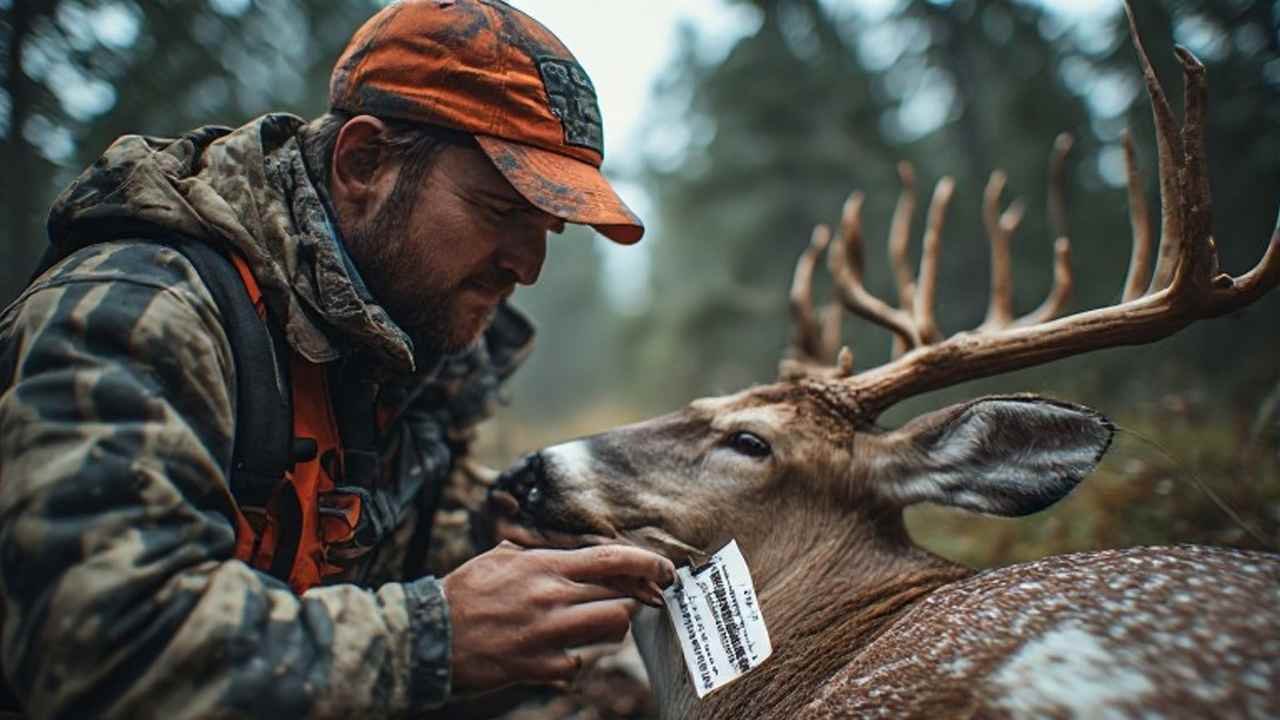
- Attach the tag or seal before moving the carcass if required.
- Do not cover, alter, duplicate or damage the identification number.
- Keep the tag or license with the animal during transport.
- Preserve evidence of sex where required.
- Retain the license summary, draw confirmation and receipt.
- Register the animal at the required office, station, website or telephone line.
- Submit the harvest report before the stated deadline.
- Keep the confirmation number or screenshot.
- Follow provincial rules for meat, hide, antlers, skulls, feathers and export.
- If the tag or seal is lost, contact the issuing authority before continuing the hunt.
A practical field habit is to keep a waterproof folder or sealed phone pouch containing your license, tag instructions, identification and reporting details. That small step prevents avoidable delays in remote areas.
Common mistakes that can invalidate a hunt
| Mistake | Why it creates risk | Better approach |
|---|---|---|
| Buying only a base license | The animal may require a separate species license | Match every product to the species and area |
| Assuming all tags are electronic | Some jurisdictions still require paper documents or physical seals | Read the current license instructions |
| Hunting before activating a seal | The seal may not legally authorize the hunt until registered | Activate or validate before entering the field |
| Using a friend’s tag | Tags and seals are generally personal and non-transferable | Obtain your own authorization |
| Missing a report deadline | Some jurisdictions use reporting to manage future licensing and enforcement | Set a reminder before the hunt |
| Confusing a draw with a license | Draw success may only grant eligibility to buy the license | Complete the purchase and carry proof |
| Travelling with an unregistered animal | Transport rules can be separate from harvest rules | Register or report before transport |
| Relying on an old guide | Rules, fees, dates and documents change | Download the current 2026–2027 guide |
| Ignoring residency rules | Non-residents may need outfitters or restricted licenses | Confirm eligibility before booking |
| Forgetting federal bird requirements | Migratory birds need a federal permit in addition to local rules | Carry the federal permit and local license |
Frequently asked questions
Do I need both a hunting license and a tag in Canada?
Often, yes. A license generally authorizes you as a hunter, while a tag, seal, validation or species license authorizes or identifies the specific harvest. The exact combination depends on the province, species, season and residency category.
Is a hunting tag the same as a seal?
No. A tag usually identifies the license or harvest authorization. A seal is commonly a physical locking or identifying device attached to wildlife. Some jurisdictions use electronic tags or validation records instead of traditional seals.
Can I use another hunter’s unused tag?
Generally, no. Hunting tags, seals, certificates and license documents are normally personal and cannot be borrowed or transferred. Use of another person’s authorization can result in seizure, tickets or prosecution.
Does winning a hunting draw mean I can start hunting immediately?
Not necessarily. A successful draw may only give you the right to purchase or receive a species license. You may still need to pay for the license, obtain the tag or validation, meet outfitter requirements and carry the final documents.
Are physical game seals still used in every province?
No. Canada has no uniform seal system. Saskatchewan, Manitoba and some Atlantic jurisdictions use terminology involving seals, tags, stickers or coupons, while Ontario and other jurisdictions increasingly rely on electronic records or updated validation documents for certain hunts.
What happens if I lose my tag or seal?
Stop and contact the issuing authority or follow its replacement process. Saskatchewan, for example, requires registered or activated big-game seals and harvest ledgers that are lost, detached or destroyed to be replaced through the official process.
Do migratory bird hunters need a provincial license?
They may. The federal Migratory Game Bird Hunting Permit is required for migratory birds, but provinces and territories can impose additional licenses, stamps, seasons, bag limits and firearm rules.
When should I check the regulations for 2026–2027?
Check them immediately before purchasing a license and again before the hunt. The most recent guide controls if a mid-season amendment changes a quota, reporting deadline, tag format or season condition.

- Canada Hunting Youth Regulations 2026–2027: Age Requirements, Licences & Hunter Rules by Province - October 10, 2026
- Where to Hunt in Canada: Provinces, Species & Planning Guide - October 10, 2026
- Hunting Tags in Canada: Validation, Attachment and Transport Rules Every Hunter Must Know - October 5, 2026