
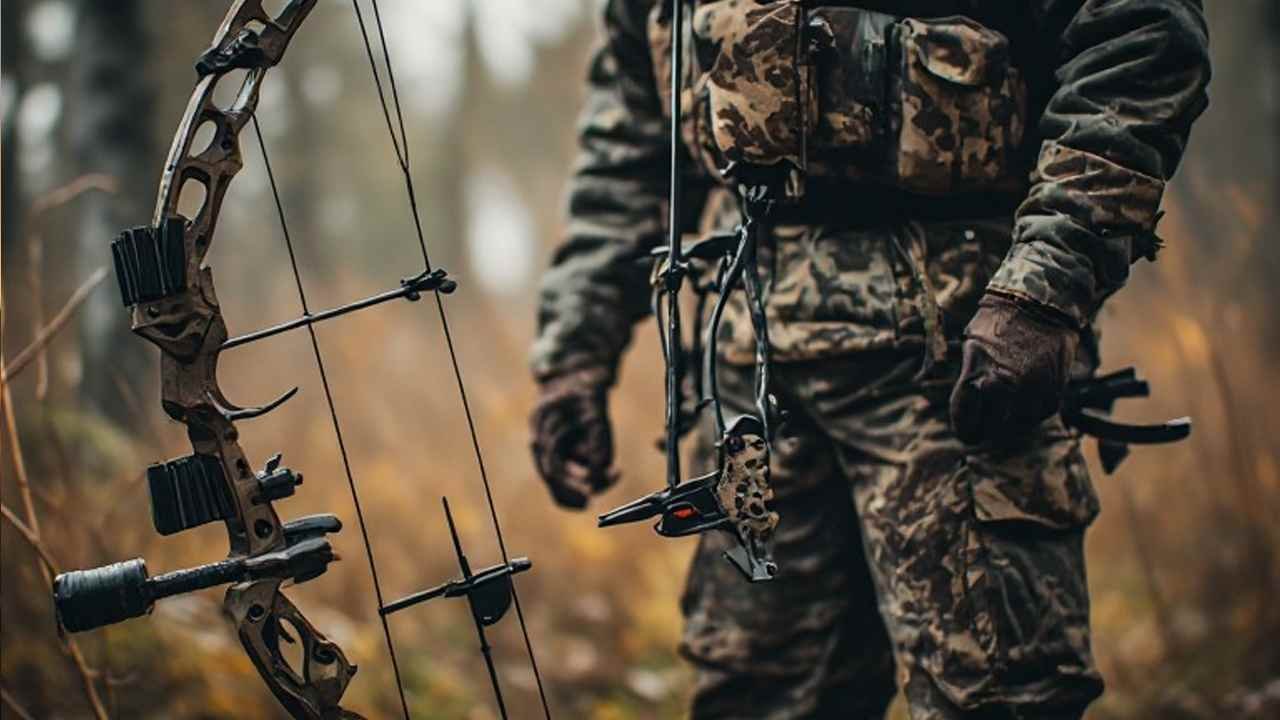
Top Hunting Rifles & Bows for Canadian Big Game: 2026 Buyer’s Guide
The best hunting rifle or bow for Canadian big game is not necessarily the fastest, lightest, or most expensive model. For most hunters, the strongest all-around setup is a dependable centre-fire rifle in .308 Winchester, .30-06 Springfield, 7mm Remington Magnum, 7mm PRC, or .300 Winchester Magnum, paired with a durable optic and ammunition that produces reliable penetration. Bowhunters should prioritize a comfortable compound bow, a legal draw weight, a strong arrow, and a broadhead that creates a dependable wound channel. The right choice depends on the species, terrain, shooting distance, recoil tolerance, local regulations, and how far you must carry the equipment.
Canadian hunting searches show a clear intent gap. Many ranking pages list popular rifles or flagship bows, but fewer explain how those choices translate to moose swamps, prairie whitetail, Rocky Mountain elk, northern caribou, black bear, and steep mountain hunts. This guide focuses on that practical decision: what works, where it works, and what to verify before travelling.
Quick Comparison: Best Equipment by Canadian Big-Game Species
| Big-game species | Best rifle class | Suitable cartridges | Best bow setup | Main priority |
|---|---|---|---|---|
| Whitetail deer | Lightweight bolt-action | .243 Win., .270 Win., .308 Win., 6.5 Creedmoor, .30-06 | 60–70 lb compound bow | Accuracy, quiet handling, manageable recoil |
| Mule deer | Mountain or all-purpose bolt-action | .270 Win., 6.5 PRC, 7mm-08, .308 Win., 7mm Rem. Mag. | Fast, forgiving compound bow | Flat trajectory and packability |
| Elk | Medium-to-heavy bolt-action | .270 Win., .308 Win., .30-06, 7mm Rem. Mag., 7mm PRC | 60–70 lb compound with heavy hunting arrows | Penetration and shot placement |
| Moose | Durable full-size bolt-action | .30-06, .300 Win. Mag., .300 WSM, .338 Win. Mag., 7mm Rem. Mag. | High-energy compound bow with a robust arrow | Penetration, broadside opportunity, reliability |
| Caribou | Lightweight or midweight bolt-action | .270 Win., .308 Win., 6.5 PRC, 7mm Rem. Mag., .30-06 | Lightweight compound bow | Carry weight, wind management, reach |
| Black bear | Short, weather-resistant bolt-action | .308 Win., .30-06, 7mm-08, .300 Win. Mag. | Quiet compound bow for close-range hunting | Fast follow-up, controlled shooting |
| Mountain sheep and goat | Ultralight bolt-action | .270 Win., 6.5 PRC, 7mm-08, .308 Win. | Compact compound bow | Minimum weight without sacrificing control |
| Bison, where legally authorized | Heavy centre-fire rifle | .300 Win. Mag., .338 Win. Mag., larger legal options | Specialized high-energy archery setup | Regulation compliance and deep penetration |
Important: Cartridge suitability does not replace provincial or territorial rules. Always confirm the current regulations for the exact wildlife management unit, season, species, and weapon type.
Best Hunting Rifles for Canadian Big Game
1. .308 Winchester: Best Practical All-Rounder
The .308 Winchester remains one of the most useful choices for Canadian deer, black bear, elk, and many moose hunts. Its strengths are practical rather than flashy:
- Broad availability of factory ammunition
- Moderate recoil in a well-balanced rifle
- Excellent bullet selection
- Short-action designs that can reduce rifle length and weight
- Easy scope and magazine support
- Strong performance at ordinary hunting distances
- Good compatibility with premium controlled-expansion bullets
The .308 Win. is especially attractive for hunters who want one rifle for deer and occasional larger game. It is not the flattest-shooting cartridge available, but it is forgiving to purchase, practise with, and maintain.
Best use: Whitetail, mule deer, black bear, elk, and carefully selected moose hunts.
2. .30-06 Springfield: Best Traditional Canadian Choice
The .30-06 Springfield gives hunters a wider range of bullet weights and slightly more velocity than the .308 Winchester in comparable bullet designs. It has a long history in North American hunting and remains an excellent choice for:
- Moose
- Elk
- Black bear
- Deer
- Caribou
- Mixed-species hunts
Its main disadvantage is rifle length and recoil compared with some short-action alternatives. However, a properly fitted .30-06 with a good recoil pad can be extremely manageable.
| Feature | .30-06 Springfield assessment |
|---|---|
| Action length | Usually long action |
| Ammunition availability | Excellent |
| Bullet selection | Excellent |
| Deer suitability | More than adequate |
| Elk suitability | Strong |
| Moose suitability | Strong with suitable bullets |
| Recoil | Moderate to noticeable |
| Ideal user | Hunter wanting one proven cartridge for several species |
3. 7mm Remington Magnum: Best for Open Country and Mixed Terrain
The 7mm Remington Magnum offers a flat trajectory, strong downrange performance, and a wide range of hunting bullets. It suits Canadian hunters who may encounter:
- Long cutline shots
- Open prairie fields
- Mountain basins
- Large-bodied elk
- Caribou across exposed terrain
The trade-off is greater recoil, muzzle blast, and ammunition cost compared with .308 Winchester or .30-06 Springfield. It also performs best when the shooter practises enough to manage that recoil consistently.
Choose it when:
- You regularly hunt beyond typical woodland distances.
- You want a trajectory advantage without moving to a very large magnum.
- You can practise from realistic field positions.
- Your rifle, scope, and ammunition form a balanced system.
4. 7mm PRC: Modern Long-Range Option
The 7mm PRC is designed around modern, high-ballistic-coefficient bullets and longer-range performance. It can be a strong choice for western Canadian elk, mule deer, and caribou hunts where wind and distance are serious factors.
A rifle review from Outdoor Life included the Proof Research Elevation in 7mm PRC at approximately 6.5 pounds without a scope, illustrating the appeal of combining a modern cartridge with a mountain-oriented rifle platform. The same testing discussion emphasized that a very light rifle can become harder to shoot well when paired with a hard-kicking cartridge. Outdoor Life’s tested elk-rifle comparisons
Advantages:
- Efficient long-range bullet designs
- Strong wind performance
- Good fit for mountain hunting
- Increasing factory ammunition availability
- Useful balance between 6.5 mm and .30-calibre magnum choices
Limitations:
- More recoil than .308 Winchester
- Ammunition may cost more
- Lightweight rifles can be unpleasant during extended practice
- Long-range capability does not compensate for poor field judgement
5. .300 Winchester Magnum: Best Heavy-Duty Versatility
The .300 Winchester Magnum is a logical choice for hunters who want a powerful cartridge for elk, moose, caribou, and other large-bodied animals. It provides:
- High velocity
- Broad bullet selection
- Strong performance in wind
- Useful reach in open terrain
- Reliable penetration with appropriate bullets
The cost is significant recoil, greater ammunition expense, and more demanding rifle weight considerations. A .300 Win. Mag. that is too light may look attractive in a catalogue but become difficult to shoot accurately.
Best practice: Choose a rifle with enough weight to control recoil, then test several loads for accuracy before the season.
Recommended Canadian Hunting Rifle Models
The model matters, but it should come after cartridge, fit, and local availability. These rifles represent useful categories rather than a claim that one brand works for every hunter.
| Rifle model or family | Best match | Why it stands out | Watch for |
|---|---|---|---|
| Tikka T3x Lite | Deer, elk, mountain hunts | Smooth action, practical weight, strong accuracy reputation | Very light rifles can increase felt recoil |
| Browning X-Bolt Speed | Deer, elk, mixed western hunts | Weather-resistant finishes and hunting-focused configurations | Confirm stock fit and magazine preferences |
| Ruger American Gen II | Budget-conscious deer and elk hunter | Competitive price category and practical field design | Test the trigger and stock fit personally |
| Weatherby Vanguard | Moose, elk, mixed big game | Solid action and heavier configurations that manage recoil | Heavier carry weight in steep country |
| Mossberg Patriot | Affordable all-purpose hunting | Broad chambering availability and straightforward controls | Inspect fit, finish, and scope mounting carefully |
| Winchester Model 70 | Traditional large-game hunter | Proven controlled-feed variants and classic handling | Model specifications vary considerably |
| Seekins Havak PH3 | Backcountry and long-range hunter | Lightweight precision-oriented platform | Higher purchase cost and recoil management |
| Proof Research Elevation | Mountain hunter | Very low rifle weight in suitable configurations | Light magnum rifles demand disciplined technique |
| Savage 110 family | Value-focused hunter | Adjustable features and many chamberings | Configuration differences affect balance |
What to Check Before Buying a Rifle
- Stock length: Your firing hand and cheek position should feel natural.
- Total field weight: Include the scope, rings, sling, magazine, and ammunition.
- Action operation: Practise cycling the rifle while wearing gloves.
- Safety design: Make sure it is easy to operate without changing your grip.
- Weather resistance: Stainless or protective finishes are valuable in rain, snow, and wet brush.
- Trigger: A predictable trigger supports accuracy, but do not chase an extremely light pull at the expense of safe handling.
- Scope mounting: Use secure rings and confirm that the optic maintains zero.
- Ammunition compatibility: A rifle may prefer one bullet design or load over another.
- Recoil control: A brake, suppressor where lawful, recoil pad, or heavier stock can change the shooting experience.
- Field serviceability: Simple designs are easier to inspect and maintain far from home.
Best Hunting Bows for Canadian Big Game
A modern compound bow can be highly effective for Canadian deer, elk, moose, caribou, and black bear when the hunter has the required skill and the equipment complies with local rules. Bow selection should begin with draw length and fit, not advertised speed.
Best Bow Categories
| Bow category | Ideal hunter | Strength | Weakness |
|---|---|---|---|
| 30–32 inch axle-to-axle compound | Tight timber and treestand hunter | Compact handling | Less forgiving for some shooters |
| 33–35 inch compound | Open country and general big game | Stable aiming platform | More difficult in dense brush |
| Lightweight compound | Mountain or fly-in hunter | Easier to carry | Can transmit more vibration and noise |
| High-speed flagship bow | Experienced archer | Flat arrow trajectory | Often costs more and may have a demanding draw cycle |
| Adjustable hunting bow | Growing or changing shooter | Useful draw-length range | Confirm that the adjustment remains efficient |
| Recurve or longbow | Traditional bowhunter | Quiet, simple, skill-intensive | Requires closer range and more practice |
| Crossbow, where legal | Hunter unable to use a vertical bow or permitted by regulation | Easier aiming from a supported position | Separate legal limits, transport rules, and handling requirements |
Compound Bow Picks for Canadian Conditions
Recent compound-bow testing has compared accuracy, speed, draw cycle, balance, noise, vibration, and finish rather than relying on advertised speed alone. In one test, bows were set close to a 29-inch draw length and approximately 70 pounds, making the results useful for comparison but not a guarantee of performance for every archer. The tested group included models such as the Hoyt Alpha AX-3, Xpedition NexLite, Mathews ARC, Prime Divide, PSE Sicario, and Bowtech Alliance. Compound-bow testing and comparison details
| Bow model | Reported axle-to-axle length | Reported test speed | Likely Canadian use |
|---|---|---|---|
| Hoyt Alpha AX-3 | 33 5/16 inches | 285 fps | Stable all-purpose big-game setup |
| Xpedition NexLite | 33 inches | 271 fps | Backcountry-focused configuration |
| Mathews ARC | 30 inches | 295 fps | Compact hunting and treestand use |
| Prime Divide | 33 inches | 271 fps | Smooth draw-cycle priority |
| PSE Sicario | 33 inches | 306 fps | Speed-focused experienced archer |
| Bowtech Alliance | 30.5 inches | 276 fps | Compact general hunting bow |
Advertised speed is only one factor. A bow that shoots slightly slower but allows you to draw smoothly, hold steadily, and place arrows accurately is normally a better hunting tool than a faster model that feels difficult to control.
Bow Setup Checklist
- Set the draw length to your actual measured requirement.
- Use a draw weight you can pull smoothly while seated or wearing layers.
- Confirm the bow reaches the legal minimum for the species and province.
- Use arrows long enough for your draw length and broadhead configuration.
- Select broadheads designed for reliable penetration and cutting performance.
- Tune the bow after installing the sight, rest, stabilizer, and quiver.
- Practise with the exact hunting arrow and broadhead combination.
- Confirm broadhead flight before the season.
- Carry spare nocks, inserts, field points, and a small tuning kit.
- Avoid reducing draw weight so far that the bow becomes inefficient or unstable.
Rifle Versus Bow for Canadian Big Game
| Consideration | Rifle | Bow |
|---|---|---|
| Effective hunting distance | Usually longer | Usually shorter |
| Practice requirement | Important | Very high |
| Equipment noise | Report can be substantial | Generally quieter |
| Carrying ammunition | Several cartridges are compact | Arrows and broadheads need protection |
| Weather impact | Wind affects trajectory | Wind affects arrow drift and animal approach |
| Shot opportunity | Can work across open terrain | Requires close, controlled opportunity |
| Recovery margin | Better energy at distance | Depends heavily on shot placement |
| Season timing | Often later than archery seasons | Frequently provides earlier opportunity |
| Field skill | Marksmanship and judgement | Stalking, concealment, range estimation, and shot execution |
Legal and Safety Checks Before a Canadian Hunt
Provincial and territorial rules are not interchangeable. A bow that meets the standard in one jurisdiction may not meet the requirements for another species or region.
Ontario, for example, lists a minimum bow draw weight of 22 kilograms, or 48.5 pounds, for moose, elk, and bear, measured at a draw length of 700 millimetres or less. For deer, the listed minimum is 18 kilograms, or 39.7 pounds. Ontario also specifies minimum arrow length and broadhead dimensions. Centre-fire rifles are identified for several big-game categories, while shotgun requirements differ by species and ammunition type. Confirm the current wording before hunting. Ontario’s current hunting regulations summary
Pre-Trip Compliance List
- Check the current provincial or territorial hunting summary.
- Confirm the exact wildlife management unit.
- Verify the open season and weapon season.
- Confirm licence, tag, and species restrictions.
- Check non-resident outfitter or guide requirements.
- Review firearm transport and declaration requirements if crossing the border.
- Confirm ammunition restrictions and magazine rules.
- Verify bow draw weight at the relevant draw length.
- Confirm arrow, bolt, and broadhead dimensions.
- Check whether baiting, electronic devices, suppressors, or night optics are restricted.
- Carry required hunter orange or other visibility clothing.
- Keep licences and tags accessible in the field.
- Follow land-access and trespass rules.
For province-specific planning, hunters can also review the Canada big-game season and species planning guide before purchasing equipment. This is especially useful when a hunt may involve multiple provinces, changing season windows, or a non-resident booking.
Best Rifle and Bow Pairings by Hunting Scenario
Prairie Whitetail Hunt
- Rifle: .308 Winchester, .270 Winchester, or .30-06 Springfield
- Bow: 30–33 inch compound bow
- Optic: Moderate-power variable scope
- Key feature: Quiet handling and reliable accuracy from a blind or field edge
- Common mistake: Choosing excessive magnification for close timber shots
Rocky Mountain Elk Hunt
- Rifle: .30-06, 7mm Remington Magnum, 7mm PRC, or .300 Winchester Magnum
- Bow: Stable 33–35 inch compound bow with a controlled draw cycle
- Key feature: Balance between rifle weight and recoil
- Common mistake: Carrying an ultralight magnum that the hunter cannot shoot comfortably
Northern Moose Hunt
- Rifle: .30-06, .300 Winchester Magnum, or .338 Winchester Magnum where appropriate and legal
- Bow: Durable compound bow with a heavy, properly tuned arrow
- Key feature: Penetration and dependable close-range shot execution
- Common mistake: Selecting equipment based only on maximum speed
Caribou Fly-In Hunt
- Rifle: .270 Winchester, .308 Winchester, 6.5 PRC, 7mm Remington Magnum, or .30-06
- Bow: Lightweight but stable compound bow
- Key feature: Total packed weight
- Common mistake: Ignoring wind, which can quickly change a long shot or arrow flight
Mountain Sheep or Goat Hunt
- Rifle: Lightweight .270 Winchester, 7mm-08, .308 Winchester, or 6.5 PRC
- Bow: Compact bow with a draw weight that remains comfortable after climbing
- Key feature: Minimum practical weight
- Common mistake: Sacrificing shooting stability to save a few ounces
Ammunition and Arrow Selection
Rifle Ammunition Priorities
- Use a bullet designed for controlled expansion rather than a lightly constructed varmint projectile.
- Match bullet weight to the cartridge and animal size.
- Test the exact factory load before the season.
- Confirm point of impact after transporting the rifle.
- Keep a written record of zero, ammunition lot, and scope settings.
- Carry enough ammunition for sight-in, hunting, and unexpected follow-up needs.
- Do not assume two loads with the same bullet weight shoot to the same point.
Arrow and Broadhead Priorities
- Choose an arrow spine that matches the bow’s draw weight and draw length.
- Select enough total arrow weight for dependable penetration.
- Use broadheads with sharp, durable blades.
- Practise with the same broadheads carried in the field.
- Inspect shafts for cracks after every hard impact.
- Confirm that the broadhead meets provincial width and design rules.
- Use a broadhead wrench or protective case during transport.
- Tune for broadhead flight rather than relying only on field-point groups.
Final Buying Advice
If you want one rifle for most Canadian big-game opportunities, start with a .308 Winchester or .30-06 Springfield. Choose the .308 when moderate recoil, short-action handling, and ammunition availability matter most. Choose the .30-06 when you want a traditional long-action cartridge with broad bullet flexibility.
For larger western animals and open terrain, consider a 7mm Remington Magnum, 7mm PRC, or .300 Winchester Magnum, but do not buy a magnum that you avoid practising with. A balanced rifle that produces consistent groups is more valuable than a lightweight rifle with punishing recoil.
For archery, select a compound bow that fits your draw length and allows you to reach the applicable legal draw weight without strain. A stable bow with a smooth draw cycle, well-tuned arrow, and broadhead is normally the smarter choice than the fastest bow on the shelf.
The best Canadian setup is the one you can carry, operate safely, practise with, and shoot accurately under realistic field conditions.
FAQs
What is the best all-around rifle cartridge for Canadian big game?
For many hunters, the .308 Winchester and .30-06 Springfield are the most practical all-around choices. They offer widely available ammunition, manageable recoil, and suitable performance for deer, black bear, elk, and many moose hunts when paired with appropriate bullets and responsible shot placement.
Is a .308 Winchester powerful enough for moose?
A .308 Winchester can be suitable for moose when local rules permit it, the hunter uses appropriate ammunition, and the shot is taken within a responsible distance. Its moderate recoil can help some hunters shoot more accurately than they would with a larger magnum.
Is 7mm PRC a good choice for elk and caribou?
Yes. The 7mm PRC is designed for modern high-ballistic-coefficient bullets and can perform well in open western terrain. Its recoil and ammunition cost are higher than those of a .308 Winchester, so the shooter must practise with the rifle before hunting.
What draw weight is needed for Canadian moose or elk hunting?
The legal minimum varies by province and species. Ontario lists 22 kilograms, or 48.5 pounds, for moose, elk, and bear, while other jurisdictions may use different measurements or requirements. Always check the current regulation for the exact hunt.
Is a faster compound bow automatically better?
No. Speed matters, but accuracy, draw-cycle comfort, noise, vibration, balance, and broadhead flight are equally important. A slightly slower bow that you can draw quietly and hold steadily is usually the better hunting choice.
Should I choose a short or long compound bow?
A shorter bow is easier to manoeuvre in dense forest, treestands, and tight blinds. A longer axle-to-axle bow generally provides a stable aiming platform and may suit open-country hunting. Your draw length, shooting form, and hunting environment should determine the choice.
What rifle weight is best for mountain hunting?
A bare rifle around 6 to 8 pounds is a common practical range, but the final hunting weight includes the optic, rings, sling, magazine, and ammunition. Going extremely light can make recoil and steady aiming more difficult, especially with magnum cartridges.
Can non-residents bring a hunting rifle into Canada?
Non-residents must follow Canadian firearm-importation and declaration rules, and the firearm must be permitted. Requirements can change, so check the current federal process and border documentation well before travelling.
What should I practice before opening day?
Practice from standing, kneeling, sitting, and supported field positions. Rifle hunters should confirm zero after transport and work on safe cycling and shooting with hunting clothing. Bowhunters should practice with broadheads, realistic distances, steep angles, and the same equipment used in the field.

- Canada Hunting Youth Regulations 2026–2027: Age Requirements, Licences & Hunter Rules by Province - October 10, 2026
- Where to Hunt in Canada: Provinces, Species & Planning Guide - October 10, 2026
- Hunting Tags in Canada: Validation, Attachment and Transport Rules Every Hunter Must Know - October 5, 2026