
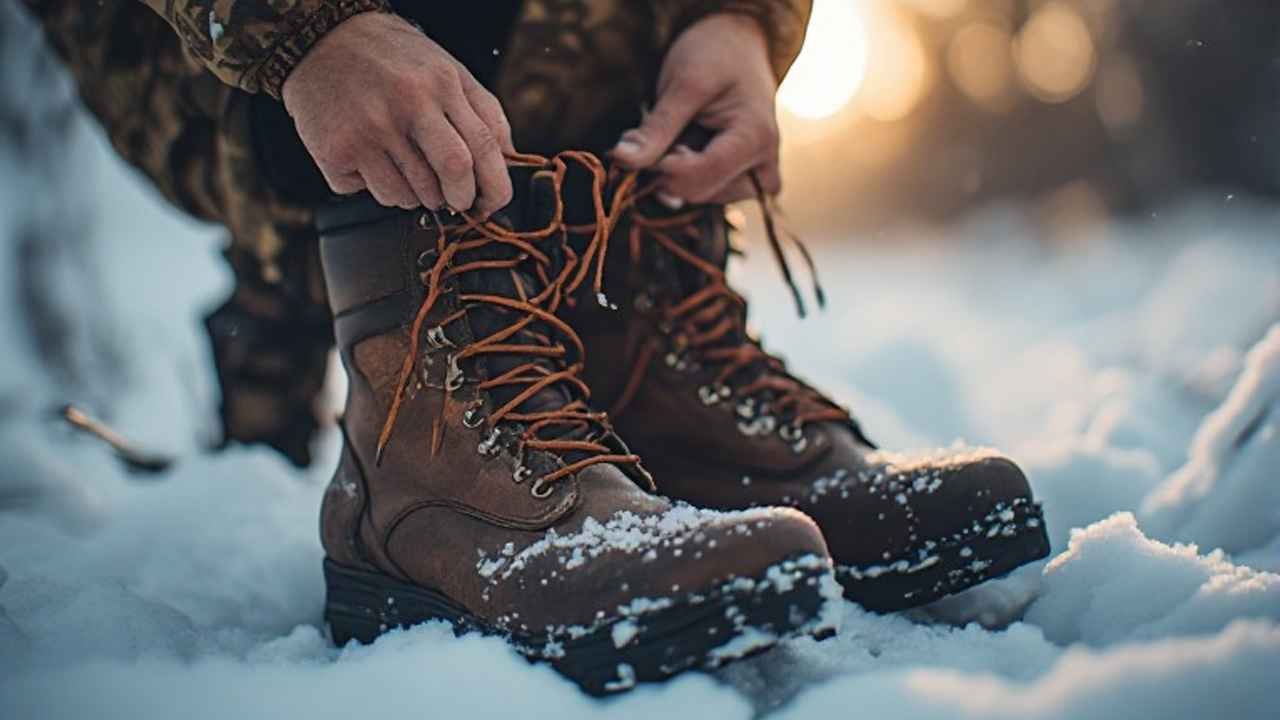
Best Hunting Boots for Canada: Waterproof & Insulated Options for Every Season
Canada’s hunting grounds run from dripping coastal rainforest to -45°C Arctic tundra, which is exactly why the best hunting boots for Canada aren’t one pair but a two-part system: a waterproof leather boot in the 200–400 gram range for active hunting from August through November, and a heavily insulated rubber or pac-style boot (800–1,600 grams) for stationary cold-weather sits and northern hunts after freeze-up. Match both to your province, your season, and how long you stay still, and your feet stay dry and warm from Nova Scotia’s wet woods to Nunavut’s barrens.
Truthfully, I learned this the expensive way. A few years back I crossed a flooded Saskatchewan field in mid-October wearing light upland boots because I was too stubborn to swap gear between hunts. By the time I reached the far treeline my socks were soaked, my toes were numb, and the only thing I shot that morning was my confidence. The fix wasn’t a more expensive boot — it was choosing the right one for the job. That’s the entire point of this guide.
Canadian hunters face a footwear puzzle nobody in the United States deals with: thirteen provinces and territories, each with its own terrain, moisture, and cold. The non-negotiables stay consistent — a reliable waterproof membrane, insulation matched to your hunting style, and an outsole that grips wet rock, slick mud, and glare ice — but the right gram weight shifts dramatically depending on where you hunt and when. If you’re glassing elk in the Alberta Rockies one week and calling geese from a Manitoba slough the next, you need a plan, not a one-size-fits-all purchase. This guide walks through insulation weights by season, boot types by province, and the specific models Canadian hunters actually rely on, drawing on my own miles in the field plus long-term testing published by GearJunkie’s 2026 hunting boot roundup and the cold-weather test data at Field & Stream.
Before you scroll, here’s what this article answers: how much insulation you really need by season, which boot families suit each province’s terrain, how rubber, leather, and pac boots compare, and how to make any pair last. Call it your pre-purchase checklist for Canadian hunting footwear.
Why Canadian Terrain Demands a Different Boot Than the US Market
Most American gear reviews assume dry western slopes and mild southern winters. Canada is a different animal. The table below shows the four climate challenges that should shape every boot decision here.
| Canadian Challenge | What It Does to Your Feet | Boot Requirement |
|---|---|---|
| Coastal rainforest (BC, NL) | Constant rain, stream crossings, saturated ground | Sealed seams, reliable membrane, quick-drying materials |
| Muskeg and slough country (MB, SK, ON) | Waterlogged peat, hidden holes, knee-deep muck | Full rubber or tall neoprene, easy to hose off |
| Prairie and northern cold (AB, SK, YT, NWT) | Wind chill down to -40°C, long stationary sits | 800+ grams of insulation, removable liners |
| Arctic tundra (NU, NWT) | Extreme cold, hard crust, no shelter | Expedition pac boots with multi-layer insulation |
On top of that, distance from a brick-and-mortar store matters. Hunters in Whitehorse or Happy Valley-Goose Bay often order boots sight unseen, which means fit and return policies matter just as much as specs. Buy from Canadian retailers with clear sizing guides, and size a half to a full step up if you plan to wear heavy merino socks.
Your boots are your most important piece of gear when trudging through snow, mud, and rocky terrain. To keep the rest of your body comfortable, learn the proper layering system for cold and wet weather in our complete guide.
The Six Specs That Decide Comfort in Canadian Hunting Boots
Every serious hunter checks these six things before handing over money. Miss one and you’ll feel it by day three.
- Waterproofing method — a taped-seam membrane like GORE-TEX beats a treated leather upper alone for Canadian wet; rubber is bulletproof but traps sweat.
- Insulation weight — measured in grams per boot; 200 g suits early season, 400 g covers most rifle hunts, 800–1,000 g handles late sits, and 1,200 g+ is for serious cold.
- Shaft height — 8 to 10 inches keeps water out of creeks and snow out of your socks; anything shorter adds risk in slough country.
- Outsole lug pattern — wide, self-cleaning lugs with heel braking win on mud and crusted snow; thin lug patterns pack up instantly.
- Last and width — Canadian hunters with wider feet need brands that offer EE widths; a snug instep means cold toes when circulation gets pinched.
- Weight per boot — a 2.3 kg mountain boot will punish you on a 12 km elk walk-in; save the heavy hitters for tree stands.
Granted, nobody nails all six perfectly in one pair. That’s why the season table below is the real decision-maker.
How Much Insulation Do You Actually Need? A Season-by-Season Breakdown
The single biggest mistake I see Canadian hunters make is buying one “winter” boot and wearing it in September. Your feet sweat, you get blisters, and by November the insulation has packed down anyway. Match insulation to your hunting calendar instead.
| Season & Window | Typical Conditions | Your Activity | Recommended Insulation |
|---|---|---|---|
| Early (Aug – mid-Sept) | Warm, humid, bugs, wet grass | Long walks, spot-and-stalk, calling | Uninsulated to 200 g |
| Mid (Oct – early Nov) | Frost, mud, first snows, rut activity | Mixed walking and glassing, some sitting | 200–400 g |
| Late (mid-Nov – Dec) | Snow, ice, longer sits, tree stands | Mostly stationary, waterfowl blinds | 600–1,000 g rubber or leather |
| Deep winter (Dec – Feb) | -20°C to -40°C, crust, hard wind | Coyotes, small game, trapping, snowshoe | 1,000–1,600 g pac boots |
A good rule of thumb: every 200 grams of insulation buys you roughly another 5–7°C of warmth when you’re sitting still. A 400-gram boot comfortable to about -5°C on a stand becomes a 1,200-gram requirement by -25°C. Meanwhile, if you’re hiking hard, 600 grams can feel like wearing ovens — circulation does the heating, not the fill.
Best Hunting Boots for Canada at a Glance
The shortlist below pulls from verified long-term testing and focuses on models you can actually buy in Canada. Prices vary by retailer and province (sales tax alone swings 5–15% depending on where you live), so treat these as performance picks, not shopping ads.
| Model | Insulation | Best For | Standout Feature |
|---|---|---|---|
| Crispi Nevada GTX | 200 g or uninsulated | All-round mountain and backcountry hunting | GearJunkie’s best-overall pick for 2026; proven fit, light build |
| Danner Recurve | Uninsulated to 400 g | Versatile do-everything leather boot | Handles conditions from low 60s°F down to the teens |
| Irish Setter VaprTrek | 400 g PrimaLoft | Mobile hills and early-season deer | Great comfort-to-price ratio for walking hunts |
| LaCrosse Alphaburly Pro | Up to 1,600 g Thinsulate | Tree stands, waterfowl, wet sloughs | Tested to -70°F; full rubber, totally waterproof |
| Crispi Wild Rock Plus GTX | 800 g GORE Dratherm XL Kelvin | Late-season elk and cold-country hunts | Heavy cold-weather insulation in a hikable boot |
| Kenetrek Mountain Extreme | 400 g or 1,000 g Thinsulate | Sheep, goat, and northern moose on rough terrain | Legendary durability, resoleable construction |
| Meindl EuroLight Hunter 300 | 300 g Gore Air-Fibre | Lightweight mobile hunters | Field & Stream’s lightweight pick; nimble on his feet |
| Hoffman Double Insulated | 9 mm wool/poly liner | Extreme-cold stationary hunting | Field & Stream’s extreme-cold champion |
| Muck Arctic Ice | Fleece + neoprene | Late-season stands, icy mornings | Rated to -60°F; easy pull-on and cleanup |
| Baffin Apex | Multi-layer polar system | Arctic hunts in Yukon, NWT, Nunavut | Rated to -100°C; the benchmark for true polar cold |
Notice the pattern: the versatile leather boots live in the 200–400 g zone, and the serious cold-weather hardware starts at 800 g. For most Canadian hunters, the smart money is one 400 g leather boot for active seasons plus one high-insulation rubber or pac boot for November onward. Two pairs used in the right windows beat one expensive pair used wrong all year.
Province-by-Province and Territory Boot Recommendations
Here’s where Canada-specific advice beats any generic list. The right boot for a coastal BC black bear hunt is almost useless on a Saskatchewan goose field — and vice versa.
| Province / Territory | Terrain & Climate Reality | Recommended Boot Family | Suggested Insulation |
|---|---|---|---|
| Alberta | Foothills, Rockies, prairie cold with chinook swings | Leather hikers + pac boots for late season | 200–400 g active; 800–1,000 g for stands |
| British Columbia | Rainforest south coast, alpine interior | Tall waterproof GTX leather, aggressive lugs | Uninsulated–400 g coastal; 400–600 g alpine |
| Manitoba | Flat muskeg, wetlands, brutal cold | Neoprene rubber + pac boots | 800–1,200 g |
| New Brunswick | Acadian forest, heavy wet snow | Waterproof leather or rubber | 400–600 g |
| Newfoundland & Labrador | Coastal fog, rain, caribou barrens, hard winters | Stiff rubber or insulated leather, grippy soles | 600–800 g |
| Nova Scotia | Damp maritime climate, mild winters | Lightweight waterproof leather | 200–400 g |
| Ontario | Mild south, cold north, tree-stand culture | Versatile leather + rubber for stands | 400 g south; 1,000–1,600 g for stands |
| Prince Edward Island | Small properties, wet mild maritime | Light waterproof, easy on/off | 200–400 g |
| Quebec | Cold, snowy, vast big-game country | Insulated leather or quality rubber | 600–1,000 g |
| Saskatchewan | Prairie cold, wind chills, farmland | Pac boots or tall rubber | 800–1,200 g |
| Northwest Territories | Subarctic, caribou trails, frozen lakes | Expedition pac boots | 1,000 g+ |
| Nunavut | Arctic tundra, wind, extreme cold | Polar-class pac boots (Baffin-style) | 1,200 g+ multi-layer |
| Yukon | Subarctic mountains, sheep and goat country | Mountain hikers + pac boots | 400–1,000 g |
If you’re planning an Alberta elk hunt around those early-season frosts, cross-check your dates against Alberta’s hunting seasons calendar so you know exactly which weather window you’re packing boots for. Likewise, when you’re rounding out the rest of your kit, boots matter most but they’re only part of the system — our guide to the best hunting gear for Canada’s climate by season walks through the base layers and outerwear that keep the whole package warm.
Rubber vs Leather vs Pac Boots: Which Family Fits Your Hunt?
If you’re still torn between families, here’s the honest breakdown.
| Boot Family | Strengths | Weaknesses | Ideal Canadian Use |
|---|---|---|---|
| Leather (with membrane) | Breathable, supportive, resoleable, great for walking | Needs care; wet snow cakes on uppers | Active hunts: elk, deer, moose on the move |
| Rubber / neoprene | 100% waterproof, easy to clean, warm options | Sweaty for long hikes; less ankle support | Tree stands, waterfowl, anything wet |
| Pac boots | Removable felt liners, extreme warmth, dry fast | Bulky, heavy, poor for steep travel | Arctic and deep-winter hunts, long sits |
Admittedly, pac boots feel like wearing coolers at first. But when you’re watching a wolf trapline at -35°C, nothing else keeps blood flowing to your toes through three motionless hours. For women, options with women’s-specific lasts — like Lowa’s Tibet Superwarm GTX singled out in Field & Stream’s testing — solve the heel-slip and cold-toe problems that men’s unisex lasts often create.
Fit and Sock System: The Free Upgrade Everyone Skips
Even the best boot fails with a bad sock setup. Canadians over-boot and under-sock more than anything else.
- Wear merino or merino-blend socks — never cotton, which holds moisture and freezes against your skin.
- Use a thin liner sock under a mid-weight cushion sock in deep cold; the two layers trap air and wick sweat.
- Size a half to a full size up from your street shoe to fit winter socks and keep toes from jamming the toe box.
- Lace progressively — snug at the instep, looser at the toe box, so circulation isn’t pinched.
- Break boots in for two weeks of short walks before a long hunt; pack boots need zero break-in, leather needs a lot.
- Carry a spare liner or dry socks in your pack for any hunt that crosses water.
Making Your Boots Last Several Canadian Winters
Boots are capital equipment. A few habits keep them alive:
- Dry them slowly at room temperature with liners pulled out — never over a wood stove, which hardens leather and delaminates glue.
- Wash rubber boots with warm water after every slough hunt; mud holds salt and grit that eats neoprene.
- Re-treat leather with waterproofing wax twice a season, especially before freeze-up.
- Check and re-glue loose soles early; a boot you notice failing in October is a boot that’s done by January.
- Store pac-boot liners loose, not compressed, so the felt keeps its loft.
Frequently Asked Questions
How many grams of insulation do I need for hunting boots in Canada?
It depends on how still you sit and how cold it gets. Active hunters in early season run 200 g or uninsulated; mid-season rifle hunting calls for 400 g; late-season tree stands and waterfowl blinds want 800–1,200 g; Arctic and deep-winter hunts need 1,200 g or a multi-layer pac system. When in doubt, err heavy — you can always open your laces, but you can’t generate warmth from a boot that never had it.
What is the best hunting boot for tree stand hunting?
Something fully waterproof with 1,000–1,600 grams of insulation, like the LaCrosse Alphaburly Pro, because you’re sitting still for hours and blood flow to your feet drops. Legitimately, a rubber boot also solves the “climbing in snow and mud” problem — you can wipe it clean before you climb and keep the stand dry.
Are rubber boots or leather boots better for Canadian hunting?
Rubber wins for waterfowl, tree stands, and anything wet. Leather wins when you’re walking long distances on varied terrain, because it breathes, supports your ankle, and holds up to rock. Most serious Canadian hunters own both.
What boots do hunters wear in the Arctic (Yukon, Northwest Territories, Nunavut)?
Expedition-class pac boots with removable multi-layer liners — Baffin’s Apex line is rated to around -100°C and is the benchmark many northern outfitters recommend. You add a loose fit, merino sock layers, and a liner system you can dry overnight in the cabin.
Should I size up when buying insulated hunting boots?
Yes — go a half to a full size larger than your street shoe, especially for 800 g+ models. The extra volume prevents toe-jam on descents and gives thick socks room to loft. Try boots on in the afternoon when feet are naturally swollen, with the exact socks you’ll hunt in.
Can one pair of boots cover every Canadian season?
Not comfortably. A 200 g boot that’s fantastic in September will leave you shivering in a November stand, while a 1,200 g boot will cook your feet on a warm archery walk-in. If you only buy one pair, choose 400 g as the compromise — and plan your second purchase around your coldest hunt.

- Canada Hunting Youth Regulations 2026–2027: Age Requirements, Licences & Hunter Rules by Province - October 10, 2026
- Where to Hunt in Canada: Provinces, Species & Planning Guide - October 10, 2026
- Hunting Tags in Canada: Validation, Attachment and Transport Rules Every Hunter Must Know - October 5, 2026