
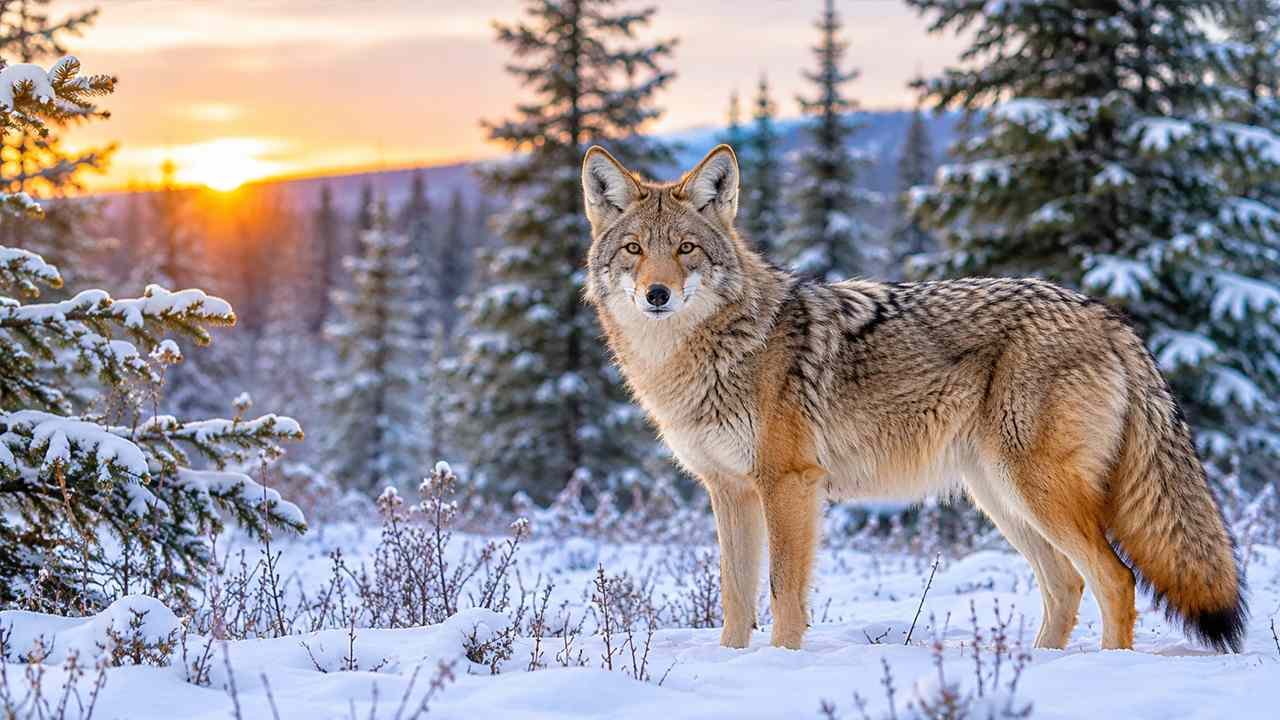
Hunting Coyotes in Canada: Winter Seasons and Provincial Rules for 2026–2027
Hunting coyotes in Canada during winter is permitted in many provinces, but the open dates, hunting licences, bag limits and firearm restrictions vary considerably by jurisdiction. For the 2026–2027 season, Newfoundland and Labrador has a province-wide coyote shooting season from September 12, 2026, to July 15, 2027, while Ontario has a September 15 to March 31 season in many Wildlife Management Units (WMUs). Quebec uses different dates across hunting zones, Manitoba has a one-coyote limit under its big-game licence provisions, and British Columbia applies management-unit-specific seasons. Alberta, Saskatchewan and the Atlantic provinces have their own additional conditions. This guide explains the rules for every Canadian province and territory so hunters can check the relevant dates and requirements before heading into the field.
Winter is an important period for coyote hunters because snow cover can make tracks easier to identify and help reveal regular travel routes. However, good hunting conditions do not automatically mean an area is open. A valid licence, the correct management zone, legal hunting equipment and any applicable land-access restrictions still determine whether a hunt is permitted.
Regulation note: This article distinguishes firearm hunting from trapping. Dates and conditions below are based on government material available on November 17, 2026. Always check the latest official regulation and local restrictions before hunting. Where an official guide contains an unclear or inconsistent date, that uncertainty is identified rather than silently corrected.
Coyote Hunting Seasons in Canada: 2026–2027 Quick Comparison
The following table provides a starting point for comparing the jurisdictions. Some entries have different conditions for different land types, licences or management zones.
| Province or territory | 2026–2027 season or applicable period | Important restriction |
|---|---|---|
| Alberta | Year-round in specified private and White Area public lands; seasonal rules apply in Green Area public lands | Land access and WMU conditions |
| British Columbia | Varies by management unit; several regions have winter seasons | Check the exact MU |
| Manitoba | August 31, 2026 – February 28, 2027 | One coyote; qualifying big-game licence |
| New Brunswick | Several licence-dependent periods | Licence class and season conditions |
| Newfoundland and Labrador | September 12, 2026 – July 15, 2027 | No coyote bag limit; firearm restrictions |
| Nova Scotia | January 1 – December 31, 2026 | No bag limit; hunting and trapping rules differ |
| Ontario | September 15, 2026 – March 31, 2027 in designated WMUs; all year in others | Wolf/coyote tags in designated WMUs |
| Prince Edward Island | October 1, 2026 – March 31, 2027 | Firearm restrictions |
| Quebec | October 18 or October 25, 2026 – March 31, 2027; selected zones until April 15 | Hunting-zone restrictions |
| Saskatchewan | Resident coyote hunting subject to provincial hunting restrictions | Sunday and big-game-zone restrictions |
| Northwest Territories | November 1, 2026 – March 31, 2027 under specified trapping provisions | Trapping regulations, not a general shooting season |
| Nunavut | November 1 – March 31 under specified wildlife regulations | Licence and area conditions |
| Yukon | August 1, 2026 – March 31, 2027 in designated subzones | Some subzones are closed |
Important: This is a summary, not a substitute for the legal season tables. In particular, Alberta, British Columbia, Ontario and Quebec require closer examination of local boundaries.
1. Alberta Coyote Hunting Regulations 2026–2027
Alberta offers considerable flexibility for coyote hunters, but the rules depend on whether the hunter is on privately owned land, public land in the White Area or public land in the Green Area.
The 2026 Alberta Guide to Hunting Regulations addresses coyote hunting separately from many other small-game seasons.
Alberta coyote hunting rules
| Location | Hunting period | Main conditions |
|---|---|---|
| Privately owned land | Throughout the year | Hunter must have the required right of access |
| Public land in the White Area | Throughout the year | Hunter must have the right of access |
| Public land in the Green Area | From the opening of the applicable big-game season to the stated spring closing date | WMU and access restrictions apply |
| CFB Wainwright, WMUs 728 and 730 | January 5 – February 28, 2027 | Residents only; range safety briefing required |
The Green Area provision in the published 2026 guide specifies May 31, 2026, or June 15 in certain WMUs with a spring black bear season. This date appears inconsistent with the 2026–2027 licence year. Hunters should obtain clarification from Alberta Fish and Wildlife rather than assume it means May 31, 2027.
Important Alberta restrictions
- Hunting coyotes does not automatically authorize trapping them.
- Hunters must have the legal right to access the property.
- Different rules apply to public lands in the Green and White areas.
- On public land, baiting for wolves and coyotes is generally restricted, with specified exceptions from December 1 to March 31 and during certain authorized black bear baiting periods.
- Special access requirements apply at Canadian Forces Base Wainwright.
Where to check: The Alberta Guide to Hunting Regulations contains the current rules and WMU information.
For hunters planning other seasonal opportunities, the Alberta hunting seasons and management-unit calendar provides additional provincial planning information.
2. British Columbia Coyote Hunting Seasons 2026–2027
British Columbia has a more geographically detailed approach to coyote hunting. Open seasons differ between regions and Management Units (MUs), so a single province-wide winter date would be misleading.
Some management units have seasons extending into June, while others close at the end of March.
Selected British Columbia coyote hunting seasons
| Management unit | Open season | Bag limit |
|---|---|---|
| MUs 2-2 to 2-19 | September 10 – June 15 | No bag limit stated |
| MUs 3-12 to 3-20 and 3-26 to 3-44 | September 1 – June 30 | No bag limit stated |
| MUs 4-1 to 4-9 and 4-14 to 4-40 | September 10 – March 31 | No bag limit stated |
| MUs 5-1 to 5-15 | September 1 – March 31 | No bag limit stated |
| MUs 6-1 to 6-11 and 6-14 to 6-30 | September 1 – March 31 | 10 |
| Selected MUs in Region 7A | August 15 – March 31 | No bag limit stated |
| Selected MUs in Region 7B | September 1 – March 31 | No bag limit stated |
| MUs 8-1 to 8-15 and 8-21 to 8-26 | September 1 – June 30 | No bag limit stated |
These are selected examples, not a complete list of British Columbia’s management units. Region 1 also requires particular attention because the cited season summary does not list an open coyote season there.
What should hunters check in British Columbia?
Before planning a winter hunt, confirm:
- Your exact Management Unit.
- Whether the area has an open coyote season.
- The applicable bag limit.
- Firearm and ammunition restrictions.
- Any provincial park or other special-area closures.
- Private-property permission and public-land access restrictions.
Winter hunting opportunity: Many British Columbia management units remain open through December, January, February and March. However, the exact closing date depends on the unit.
3. Manitoba Coyote Hunting Season 2026–2027
Manitoba has a particularly important licence condition that hunters should understand before planning a coyote hunt.
Under the provincial Hunting Seasons and Bag Limits Regulation, coyotes may be hunted under the authority of a current-year big-game licence.
Manitoba coyote season
| Hunting area | Open season | Bag limit |
|---|---|---|
| All Game Hunting Areas except GHA 38 | August 31, 2026 – February 28, 2027 | 1 coyote |
Licence requirements
- A current-year big-game licence is required.
- No separate coyote tag is required under these provisions.
- Manitoba residents may hunt in a valid Game Hunting Area under the applicable licence.
- Canadian and non-Canadian residents must satisfy the applicable licence and unused game-tag requirements for the area, species and hunting period.
- The licence must remain valid for the relevant hunting circumstances.
These conditions matter because holding a general hunting licence does not necessarily give every hunter unrestricted access to all Game Hunting Areas.
The provincial regulation also excludes GHA 38 from the stated coyote season.
Winter planning: January and February provide opportunities within the published season, but hunters should check their licence validity and area permissions before travelling.
4. New Brunswick Coyote Hunting Regulations
New Brunswick has several licence-dependent opportunities for hunting coyotes. The rules are more complicated than simply following one fall-to-winter date range.
The province distinguishes between varmint hunting, hunting under a bear licence and other hunting licence categories.
New Brunswick coyote hunting periods
| Period | Applicable regulatory context |
|---|---|
| January 1 – September 19, 2026 | General coyote hunting period, subject to the applicable licence |
| October 1 – December 31, 2026 | General coyote hunting period under the applicable hunting licence |
| April 20 – June 30, 2026 | Additional opportunity under the resident or non-resident bear licence |
| September 1 – the Saturday before the last full week of September | Additional coyote opportunity under the bear licence |
The dates above describe different legal provisions, not one continuous season available under every licence. The current regulation and the 2026–2027 Hunt and Trap Book must be consulted to establish the licence applicable to the particular hunt.
Licence considerations
- A varmint licence covers specified coyote hunting opportunities.
- Other periods require the appropriate hunting licence class.
- Non-resident hunters have separate licence categories.
- Fur harvesting and pelt possession have additional requirements.
New Brunswick also has separate trapping and snaring periods. Do not assume a firearm hunting season and a fur-harvesting season have identical dates.
5. Newfoundland and Labrador Coyote Hunting Season 2026–2027
Newfoundland and Labrador offers a lengthy coyote shooting season. Its 2026–2027 Hunting and Trapping Guide provides province-wide dates, firearm conditions and licensing information.
Coyote shooting season
| Rule | 2026–2027 details |
|---|---|
| Open season | September 12, 2026 – July 15, 2027 |
| Hunting area | Province-wide |
| Bag limit | No bag limit |
| Coyote shooting licence | Combined with the small-game licence |
| Permitted centre-fire rifle | Up to and including .225 calibre, subject to restrictions |
| Shotgun | Shot size #2 or larger |
An important restriction applies on the Island portion of the province: centre-fire rifles not greater than .225 calibre may be used for coyotes and wolves only outside the open big-game moose season, September 12 to December 31, 2026.
Additional opportunities and requirements
- Rimfire rifles not greater than .22 calibre may be used to shoot coyotes during open small-game seasons.
- Valid big-game licence holders may harvest coyotes during the applicable open season for moose, caribou or black bear in the management area covered by their licence.
- Trappers with valid trapping licences have additional shooting opportunities during applicable trapping seasons.
- Hunters and trappers are encouraged to submit entire coyote, wolf and wolf-coyote hybrid carcasses through the provincial collection programme.
- The government offers a $25 payment for eligible carcass submissions.
The carcass collection programme is particularly relevant to wildlife monitoring because the province is studying the distribution of coyotes, wolves and wolf-coyote hybrids.
Official regulation: The Newfoundland and Labrador 2026–2027 Hunting and Trapping Guide provides the detailed shooting and trapping provisions.
6. Nova Scotia Coyote Hunting Rules
Nova Scotia classifies coyotes as Other Harvestable Wildlife. This classification gives hunters a different regulatory arrangement from jurisdictions that use a fixed winter shooting season.
Nova Scotia hunting rules
| Regulation | Requirement |
|---|---|
| Hunting season | January 1 – December 31 |
| Bag limit | No limit |
| Wildlife classification | Other Harvestable Wildlife |
| Wildlife Habitat Stamp | Required for ordinary hunting |
| Trapping | Restricted to licensed furharvesters during the trapping season |
| Coyote trapping period | October 15 – March 31 |
The year-round shooting period should not be confused with the trapping season. They are separate activities with different licensing conditions.
Additional considerations
- Hunters must follow applicable firearm and ammunition regulations.
- Hunter orange requirements apply from October 1 through the end of the general open deer season.
- Property owners or their authorized agents may have separate provisions for dealing with coyotes causing property damage.
- Pelt export and possession requirements should be checked before transporting harvested animals outside Nova Scotia.
Winter is therefore a useful planning period for hunters who want to pursue coyotes under the province’s year-round hunting provision.
7. Ontario Wolf and Coyote Hunting Season 2026–2027
Ontario manages coyotes under its combined wolf and coyote hunting regulations. This distinction is important because some Wildlife Management Units require additional tags and have special restrictions designed to protect eastern wolf populations.
Ontario wolf and coyote seasons
| Wildlife Management Units | Open season | Tag requirement |
|---|---|---|
| WMUs 1A, 1C, 1D, 2–10, 11A, 11B, 12–41, 42*, 46, 47, 48*, 49, 50*, 53A*, 53B, 54*, 55*, 56*, 57*, 58* | September 15 – March 31 | Wolf/coyote tag |
| WMUs 43–45, 59, 60*, 61–74, 75*, 76–95 | All year | No wolf/coyote tag |
* Certain geographic townships within marked WMUs have additional closures.
The season crossing December 31 requires hunters to pay attention to the calendar-year tag system.
Ontario licence and tag requirements
Hunters generally need:
- A valid Outdoors Card.
- A small-game licence.
- A valid wolf/coyote tag where required.
- Proof of firearm accreditation when hunting with a firearm.
Ontario permits residents and non-residents to purchase a maximum of two wolf/coyote tags per calendar year.
Important Ontario restrictions
- Hunting and trapping are prohibited in specified areas within and surrounding Algonquin Provincial Park, Killarney Provincial Park, Queen Elizabeth II Wildlands Provincial Park and Kawartha Highlands Provincial Park.
- Wolves and coyotes generally cannot be hunted in provincial parks or Crown Game Preserves.
- Party hunting is not permitted where individual tags are required.
- Special rifle-calibre restrictions apply in specified southern Ontario geographic areas.
- The tag must remain attached to the animal until the pelt is skinned and is being frozen or sent for tanning.
Ontario also requires hunters to follow the relevant tagging and mandatory reporting procedures.ontario.
Before hunting: Read the Ontario Wolf and Coyote Hunting Regulations and check the township-level closures, not just the WMU number.
8. Prince Edward Island Coyote Hunting Season
Prince Edward Island has a defined fall and winter coyote hunting period.
PEI coyote season
| Regulation | Details |
|---|---|
| Open season | October 1 – March 31 |
| Hunting area | Province-wide |
| Daily bag limit | No limit stated |
| Possession limit | No limit stated |
| Muzzleloader | Permitted for coyote hunting |
Firearm restrictions
The provincial hunting summary identifies specific firearm restrictions:
- A shotgun loaded with a single bullet is prohibited.
- A rifle larger than .22 calibre is prohibited for this hunting activity.
- Muzzle-loading firearms are permitted for coyote hunting.
- Hunters must comply with the applicable land-access and hunting-method regulations.
PEI also prohibits using ATVs or snowmobiles to actively pursue or chase game. This is particularly important for hunters using dogs.
The October-to-March period makes PEI a straightforward province to include in a winter coyote hunting calendar.
9. Quebec Coyote Hunting Season 2026–2027
Quebec uses hunting zones to determine the authorized coyote and wolf hunting periods. The 2026–2028 small-game regulations provide separate dates for different groups of zones.
Quebec coyote and wolf hunting dates
| Hunting zones | 2026–2027 open season |
|---|---|
| Zones 1–11, 15, 26 and 27 | October 25, 2026 – March 31, 2027 |
| Zones 12, 13, 14, 16, 18, 21 and 28 | October 18, 2026 – March 31, 2027 |
| Zone 19 South and Zone 29 | October 18, 2026 – April 15, 2027 |
The authorized equipment includes firearms, crossbows and bows.
Where coyote hunting is prohibited
The 2026–2028 rules identify several areas where coyote and wolf hunting is not permitted:
- Zone 17.
- Northern portion of Zone 19.
- Zone 20.
- Zone 22.
- Zone 23.
- Zone 24.
Hunters should also remember that special territories within an otherwise open hunting zone may have different rules. Indigenous territories, wildlife reserves and other controlled areas may have additional conditions.
Quebec winter hunting checklist
- Identify the correct hunting zone.
- Check the applicable 2026–2027 season.
- Confirm whether the property or territory has special restrictions.
- Review firearm, bow and crossbow requirements.
- Verify any licence and harvest conditions.
- Check for regulatory updates before travelling.
Winter opportunity: Selected southern Quebec zones remain open until April 15, 2027, making them particularly relevant to late-winter planning.
10. Saskatchewan Coyote Hunting Regulations
Saskatchewan has a different regulatory structure from provinces that publish a specific coyote season table in their annual hunting guide.
The provincial Wildlife Regulations establish a special provision for resident hunters pursuing coyotes and foxes.
Saskatchewan resident hunting provision
A Saskatchewan resident may hunt coyotes and foxes at any time, subject to the applicable restrictions. However, the provision does not permit hunting on Sundays within a Wildlife Management Zone during an established big-game season.
Important rules
| Regulation | What hunters should know |
|---|---|
| Resident eligibility | The special provision specifically identifies Saskatchewan residents |
| Sunday restriction | Applies within a WMZ during an established big-game season |
| Night hunting | General restrictions prohibit hunting between half an hour after sunset and half an hour before sunrise |
| Searchlights | Searchlights cannot be used for hunting |
| Trapping | Separate fur-harvesting and trapping requirements apply |
The provincial hunting guide does not provide a conventional coyote season-date table. Therefore, hunters should not interpret the absence of a table as an unrestricted permission for every hunter or every hunting method.
Important: Non-resident hunters should confirm their specific eligibility and licence requirements with Saskatchewan’s wildlife authorities before planning a hunt.
11. Northwest Territories Coyote Regulations
The Northwest Territories requires special attention because its coyote provisions are found in the trapping regulations rather than a conventional province-wide sport-shooting season.
Coyote trapping period
| Licence category | Hunting area | Open season |
|---|---|---|
| General Hunting Licence (GHL) | Specified areas D, R, S and U | November 1 – March 31 |
| Special Harvester Licence (SHL) | Applicable traditional harvesting areas | Dates specified on the licence |
These are trapping-season provisions. They should not be presented as a general firearm hunting season for all residents and visitors.
Additional requirements
- Check the applicable wildlife management area.
- Verify the licence category.
- Follow local harvesting and land-claim requirements.
- Observe trapping equipment and season restrictions.
- Do not waste, abandon or allow regulated raw pelts to spoil.
The Northwest Territories government identifies coyote among the furbearers covered by its pelt-wastage provisions.
12. Nunavut Coyote Hunting and Harvesting Regulations
Nunavut’s wildlife regulations require hunters and harvesters to pay close attention to local harvesting rights and licence categories.
The publicly indexed wildlife regulation schedule identifies coyote harvesting periods from November 1 to March 31 in specified areas.
Nunavut coyote harvesting provisions
| Wildlife management area | Open period | Licence categories identified |
|---|---|---|
| D, R, S and U | November 1 – March 31 | GHL, GHLS and STL |
| Specified licensed harvesting area | November 1 – March 31 | BLA |
These provisions should not be interpreted as an unrestricted recreational shooting season. The applicable activity, licence and harvesting rights must be confirmed with the local Wildlife Office and Hunters and Trappers Organization.
What should harvesters verify?
- Whether they have harvesting rights in the intended area.
- Whether a General Hunting Licence or other authorization applies.
- Whether the relevant regulation permits the intended harvesting method.
- Whether local wildlife management restrictions apply.
- Whether there are reporting or possession requirements.
Nunavut publishes a 2026–2027 Hunting Regulations Guide, which hunters should consult alongside the applicable legislation.
13. Yukon Coyote Hunting Season 2026–2027
Yukon provides defined coyote hunting dates in designated Game Management Subzones.
Yukon coyote season
| Management subzones | Season dates | Bag limit |
|---|---|---|
| 1-15, 1-17 to 1-19 and 1-21 to 1-72 | August 1 – March 31 | No limit stated |
| 1-01, 1-04, 1-05 and 1-12 to 1-14 | Closed | Not applicable |
The dates and subzone distinctions above are based on the published 2025–2026 table and should not be treated as independently confirmed 2026–2027 rules.
Yukon hunting requirements
- Hunters generally need a valid Yukon hunting licence.
- Game Management Subzone boundaries must be checked.
- Special area restrictions may apply.
- Non-residents hunting big game must follow the applicable outfitter or special-guide requirements.
- Indigenous harvesting rights and applicable land-claim agreements must be respected.
The Government of Yukon updated its hunting licence information and application process in 2026. Hunters should consult the latest Yukon hunting regulations summary before heading out.
Winter Coyote Hunting: General Rules Every Canadian Hunter Should Understand
The provincial season is only one part of the legal requirements. Hunters must also consider the location, hunting method, licence category and any special restrictions that apply to their intended activity.
1. Hunting licence and authorization
The type of licence depends on the jurisdiction.
| Licence or authorization | Why it matters |
|---|---|
| Small-game hunting licence | Required in some provinces for coyote hunting |
| Big-game licence | Manitoba and some other licence-specific situations |
| Wildlife certificate | Relevant to Alberta hunting eligibility |
| Varmint licence | Applies to certain New Brunswick hunting periods |
| Fur-harvesting licence | Required for applicable trapping and pelt-related activities |
| Wolf/coyote tag | Required in designated Ontario WMUs |
| General Hunting Licence | Relevant to certain territorial harvesting provisions |
Do not assume that a licence issued in one province authorizes hunting in another.
2. Public land versus private property
Land access can change the rules significantly.
Before hunting, verify:
- Whether the property is privately owned or public land.
- Whether the landowner has granted permission.
- Whether the land is inside a provincial park or protected wildlife area.
- Whether public-land hunting is permitted in the specific management unit.
- Whether additional restrictions apply to roads, trails and settlements.
In Alberta, for example, the White Area and Green Area have different coyote hunting provisions.
3. Firearms and ammunition
Firearm restrictions are not uniform across Canada.
A hunter should check:
- Permitted firearm types.
- Maximum rifle calibre, where applicable.
- Shotgun ammunition requirements.
- Firearm discharge restrictions.
- Local restrictions near roads, residences and public facilities.
- Federal firearms possession and transportation requirements.
Never assume that a firearm permitted for deer hunting is automatically permitted for coyote hunting in another province.
4. Hunting hours and night hunting
Winter daylight is limited in much of Canada. This makes hunting-hour restrictions especially important.
Some jurisdictions have general restrictions on hunting after sunset or before sunrise, while others have specific exceptions.
For example, Saskatchewan’s general hunting regulations restrict hunting between half an hour after sunset and half an hour before sunrise.
Hunters should also verify rules covering:
- Artificial lights and searchlights.
- Night-vision equipment.
- Thermal optics.
- Electronic calling devices.
- Hunting from vehicles.
- Use of dogs and other pursuit methods.
The legality of a particular device or hunting method should be confirmed under the applicable provincial or territorial regulations.
5. Baiting and predator hunting
Baiting rules vary considerably.
Alberta has specific restrictions on baiting wolves and coyotes on public land, including specified seasonal exceptions. Other jurisdictions may regulate bait placement, hunting methods or wildlife feeding differently.
Before setting up a bait location, verify:
- Whether baiting is allowed for coyotes.
- Whether the land classification changes the rules.
- Whether the bait must be removed after the hunting period.
- Whether food waste or animal carcasses can legally be used.
- Whether other wildlife management restrictions apply.
6. Tags, reporting and pelt requirements
Some provinces require individual tags, while others use licence-based harvest authorization.
After a successful hunt, check:
- Whether the animal must be tagged.
- When the tag must be attached.
- Whether a harvest report is mandatory.
- Whether the pelt must be preserved.
- Whether the carcass must be submitted for a monitoring programme.
- Whether an export permit is required when transporting the pelt.
These requirements are especially important when travelling between provinces.
Best Time to Hunt Coyotes in Canada During Winter
Although the legal dates determine when hunting is permitted, winter conditions influence when hunters may find it practical to go into the field.
December: Early winter opportunities
December is an important month because many provincial seasons are already open.
Hunters can consider:
- Checking fresh tracks after snowfall.
- Identifying regularly used travel corridors.
- Reviewing access routes before temperatures fall further.
- Confirming whether holiday-period hunting restrictions apply.
- Checking the expiry date of calendar-year tags.
Ontario hunters should pay particular attention to the December 31 tag transition.
January: Midwinter hunting
January provides several opportunities where the relevant season remains open.
Important considerations include:
- Snow depth and accessibility.
- Changing weather conditions.
- Visibility and safe shooting distances.
- Legal hunting hours.
- Fresh tracks around woodland edges and open fields.
In Newfoundland and Labrador, January falls within the long province-wide shooting season.
February: Late-winter opportunities
February is particularly relevant for hunters in Manitoba, Ontario, Quebec, British Columbia and other jurisdictions with open winter seasons.
Before travelling, check the exact closing date rather than relying on last year’s calendar.
March: Final winter opportunities
March is the final month of several major provincial coyote hunting seasons.
Examples include:
- Manitoba: February 28 closing date, so the season has already ended.
- Ontario: March 31 in designated WMUs.
- Quebec: March 31 in many zones, with selected areas remaining open until April 15.
- Prince Edward Island: March 31.
- British Columbia: March 31 in several management units.
- Yukon: March 31 in the designated subzones described in its applicable regulations.
This is a good time to review upcoming licence renewals and changes to the next hunting year.
Provincial Differences That Hunters Should Not Overlook
The following comparisons highlight some of the most important regulatory differences.
| Regulatory issue | Examples |
|---|---|
| Year-round hunting provisions | Alberta in specified locations; Nova Scotia under its other-harvestable-wildlife classification |
| Defined winter shooting seasons | Manitoba, Ontario, Quebec and PEI |
| Long shooting season | Newfoundland and Labrador |
| Management-unit-specific dates | British Columbia and Ontario |
| Licence-dependent periods | New Brunswick |
| Special resident provision | Saskatchewan |
| Separate trapping provisions | Northwest Territories and Nunavut |
Which provinces have no coyote bag limit?
The following jurisdictions have no general numerical bag limit in the cited provisions or selected season tables:
- British Columbia in the listed no-bag-limit units.
- New Brunswick under the relevant coyote hunting provisions.
- Newfoundland and Labrador.
- Nova Scotia.
- Prince Edward Island.
- Selected Yukon subzones.
However, no bag limit does not mean no restrictions. Hunters must still comply with open seasons, licensing, firearm rules, land access and applicable wildlife protection provisions.
Which provinces require additional attention to hunting zones?
These jurisdictions deserve particular attention:
- British Columbia: Management Units determine season dates and bag limits.
- Ontario: WMUs and geographic township closures affect hunting opportunities.
- Quebec: Hunting zones determine the opening and closing dates.
- Alberta: Public-land classification and WMUs affect hunting authorization.
- Yukon: Game Management Subzones and special restrictions determine where hunting is allowed.
Coyote Hunting Preparation Checklist for Winter 2026–2027
Use this checklist before planning a winter hunting trip.
- Confirm the province or territory where you intend to hunt.
- Identify the exact WMU, MU, GHA or Game Management Subzone.
- Verify the 2026–2027 opening and closing dates.
- Check the correct hunting licence category.
- Confirm bag limits and tag requirements.
- Check firearm and ammunition restrictions.
- Obtain written landowner permission where necessary.
- Review baiting and hunting-method restrictions.
- Check legal hunting hours and local closures.
- Confirm tagging, reporting and pelt transportation requirements.
- Review current weather and road-access conditions.
- Carry the relevant regulation summary during the hunt.
Why annual regulation checks matter
A season that was open last year may have changed. Governments can adjust hunting dates, bag limits, licence conditions and management-unit boundaries as wildlife management priorities change.
For that reason, hunters should use the current annual guide rather than relying on old printed calendars, hunting forums or previous-season articles.
Frequently Asked Questions About Coyote Hunting in Canada
1. Is coyote hunting legal in Canada?
Yes. Coyote hunting is legal in many Canadian provinces and territories, subject to the applicable wildlife regulations. However, each jurisdiction establishes its own seasons, licensing requirements, hunting areas and restrictions.
2. Can you hunt coyotes in Canada during winter?
Yes. Many jurisdictions have open coyote hunting opportunities during December, January and February. However, the exact dates depend on the province, territory, management unit and licence category.
3. Which Canadian province has the longest coyote hunting season?
Newfoundland and Labrador has a particularly long 2026–2027 shooting season, running from September 12, 2026, to July 15, 2027. Nova Scotia also classifies coyotes as other harvestable wildlife with a year-round hunting period.
4. Can you hunt coyotes all year in Alberta?
Not everywhere under the same rules. Alberta permits year-round coyote hunting in specified private lands and public lands in the White Area, subject to access requirements. Public lands in the Green Area have seasonal restrictions.
5. Is there a bag limit for coyotes in Ontario?
Ontario has different rules depending on the Wildlife Management Unit. Hunters in designated WMUs can purchase a maximum of two wolf/coyote tags per calendar year. In other designated WMUs, the season is open year-round without a wolf/coyote tag requirement.
6. Do you need a special licence to hunt coyotes in Manitoba?
Coyotes can be hunted under the authority of a current-year big-game licence, subject to the applicable area and licence conditions. The provincial regulation sets a limit of one coyote in the listed open Game Hunting Areas.
7. Can non-residents hunt coyotes in Canada?
Non-residents may hunt coyotes in certain Canadian jurisdictions, but they must meet the relevant non-resident licensing requirements. Some provinces impose additional conditions involving guides, outfitters, hunting licence categories or permitted hunting areas.
8. Can you hunt coyotes in British Columbia all winter?
Many British Columbia Management Units have open winter seasons. However, the dates vary by unit, and some areas have additional restrictions. Always check the exact MU before hunting.
9. Is coyote hunting open year-round in Nova Scotia?
Yes. Under Nova Scotia’s other-harvestable-wildlife provisions, coyotes may be hunted from January 1 to December 31. There is no bag limit under this provision. Trapping is separately regulated.
10. Can you hunt coyotes in Quebec in March?
Yes. The 2026–2027 season remains open through March 31 in many authorized hunting zones. Zones 19 South and 29 have a longer period extending to April 15, 2027.
11. Is coyote trapping the same as coyote hunting?
No. Firearm hunting and trapping are different activities and may have separate seasons, licences, equipment requirements and reporting conditions. A trapping licence does not automatically authorize every form of firearm hunting.
12. Can you hunt coyotes on private property without permission?
Do not assume that private property automatically gives you permission to hunt. Property ownership, occupancy, access rights and provincial hunting laws must all be considered. Obtain the required landowner permission before entering private property.
13. Are coyote pelts subject to regulations in Canada?
Yes. Several jurisdictions have requirements covering pelt preservation, possession, transportation, export and fur harvesting. Hunters should check the applicable rules before selling or transporting pelts.
Final Thoughts: Check Your Local Rules Before Planning a Winter Hunt
Coyote hunting in Canada offers opportunities throughout much of the winter, but the regulations are far from uniform. Alberta’s land-based rules, Ontario’s wolf/coyote tags, Quebec’s hunting-zone dates and Newfoundland and Labrador’s extended shooting season demonstrate why hunters should never rely on a single national calendar.
The best approach is to identify your hunting location first, confirm the applicable licence and then check the current season dates and restrictions. This is particularly important for hunters travelling between provinces or planning hunts that cross December 31.

- Winter Hunting in Canada: Species, Seasons and Regional Opportunities (2026–2027) - November 17, 2026
- Late-Season Waterfowl Hunting in Canada: Regulations and Opportunities for 2026-2027 - November 17, 2026
- Hunting Coyotes in Canada: Winter Seasons and Provincial Rules for 2026–2027 - November 17, 2026