Hunter Reporting in Canada 2026-2027: Who Must Report a Harvest and When
If you buy a hunting tag or species licence in most Canadian provinces, you must file a harvest report (or register the animal) — even if you never fired a shot or came home empty-handed. Deadlines vary sharply by jurisdiction: Quebec requires big game registration within 48 hours of the kill, Ontario generally wants reports within 14 days of the season’s close, and British Columbia gives moose, elk and caribou licence holders until March 31. Skip your filing and you can be hit with surcharges ($25–$50 in Ontario), a $15 fee in Alberta, or — in B.C. — a full suspension of your ability to buy any hunting or fishing licence until you comply. This guide breaks down exactly who reports, in which province, by which date, and how to do it in minutes.
This system has been known to catch many good hunters off guard. One hunter in Ontario bought a deer tag in September, didn’t draw a single opportunity all fall, and completely forgot his filing was due in mid-January. The $25 surcharge showed up on his next licence purchase — small money, but an avoidable sting. The rules below come straight from provincial and territorial wildlife agencies, so let’s get you compliant before any deadline sneaks up.
What Is Mandatory Hunter Reporting?
Mandatory reporting (sometimes called compulsory reporting or hunter harvest surveys) is the system wildlife agencies use to collect first-hand data from hunters instead of relying only on biological samples or aerial counts. Biologists use your information to:
- Estimate total harvest and hunter success rates
- Set tag quotas, draw odds, and season structures for next year
- Track population trends for species like moose, caribou and elk
- Justify regulatory changes at the management-table level
Think of it this way: your report is your seat at the table. When draw quotas get cut or seasons get shortened, the biologists are working from the data hunters like you submitted — or didn’t.
Who Must Report a Harvest in Canada?
The short version: licence and tag holders are the reporting unit in most provinces — not just successful hunters. Check whether any of these describe you:
- ✅ You purchased or were issued a species tag or licence for a managed animal (moose, elk, caribou, deer, bear, turkey, wolf/coyote in Ontario)
- ✅ You drew a special licence or limited-entry authorization (Alberta, Saskatchewan)
- ✅ You killed an animal in a registration-required category (Quebec, New Brunswick, Nova Scotia)
- ✅ You’re a non-resident or guided hunter — your outfitter may handle part of the process, but the obligation usually traces back to the licence holder
- ✅ You bought a licence and didn’t hunt at all — in ON, BC and SK, a “did not hunt” filing is still legally required
Key distinction: Filing a report is separate from tagging your animal. Before any registration station will process your harvest, your tag and seal obligations must already be met — see our guide to Canada hunting tag and seal requirements for how that paperwork works in the field.
Province-by-Province Harvest Reporting Rules (2026–27 Season)
Every jurisdiction runs its own program. Here’s the full comparison table:
| Province/Territory | Who Must Report | Species Covered | Deadline | How to File |
|---|---|---|---|---|
| Ontario | All tag/licence holders, even if unsuccessful | Moose, elk, deer, black bear, wild turkey, wolf/coyote | ~14 days after the season’s close (e.g., moose Dec 29; deer and wolf/coyote Jan 14; elk tag holders Oct 18 for 2026) | Online via Hunt & Fish Ontario account, or 1-800-288-1155 |
| British Columbia | Resident holders of species licences | Moose, elk, caribou | March 31 of the licence year | WILD system online, or paper form by mail/at FrontCounter BC |
| Alberta | Buyers of all special licences | Draw hunts: moose, elk, deer, pronghorn, etc. | Jan 31 for most; March 15 for late-winter elk seasons | Alberta RELM website or app |
| Saskatchewan | Every buyer of a surveyed licence, hunted or not | Bear, moose, elk, deer, pronghorn, game birds, wolf | Jan 20, 2027 for most 2026–27 licences | HAL account, SK Hunt & Fish app, or 1-888-773-8450 |
| Manitoba | Licence purchasers (survey per licence) | Big game and game birds | Season-dependent; check your account | Manitoba eLicensing portal |
| Quebec | Anyone killing a declared species | White-tailed deer, moose, black bear, wild turkey | Within 48 hours of the kill | Online or at a registration station |
| New Brunswick | Every successful hunter | Moose, deer, black bear | Registration required before keeping the animal | Big Game Registration Portal or in-person stations |
| Nova Scotia | Deer hunters | White-tailed deer | At registration, season-dependent | Online or at $1 registration stations |
| PEI | Sampled licence holders (survey) | Deer and other game | When surveyed by Fish & Wildlife | Text/phone survey |
| Newfoundland & Labrador | Species/area-specific conditions | Big game | Varies by zone | Check the annual Hunting Guide |
| Yukon | Successful big game hunters | Moose, caribou, sheep, and more | Within 15 days after month-end of the kill (some hunts sooner) | Yukon government reporting system |
| NWT / Nunavut | Species- and area-specific (mandatory on some trophy/draw hunts) | Big game | Varies by tag conditions | Check tag conditions with the wildlife department |
Three Filing Styles to Understand
- Activity reports (ON, BC, AB, SK, MB): Every licence holder responds — successful or not — covering participation, days afield, management units, and harvest details.
- Kill registration (QC, NB, NS): Only successful hunters register, usually quickly, so conservation officers can verify legality and collect biological samples.
- Sampled surveys (PEI, NL, federal waterfowl): Agencies contact a subset of hunters — respond promptly when asked.
Mandatory Reports vs. Voluntary Surveys — Don’t Mix These Up
| Feature | Mandatory Reporting | Voluntary Surveys |
|---|---|---|
| Legal obligation | Yes — enforceable | No |
| Applies to | Licence/tag holders, sometimes all hunters | Sampled hunters, or anyone asked |
| Consequence for skipping | Surcharges, refusals, charges | Skewed data only |
| Examples | ON hunter reports; BC species licence reports; QC registration; SK surveys | ECCC’s National Harvest Survey for migratory birds; many provincial checklists |
Waterfowl hunters, take note: your Migratory Game Bird Hunting Permit puts you in the pool for the federal National Harvest Survey run by Environment and Climate Change Canada. It’s voluntary — but the wing age and species data drive continental duck and goose regulations, so answer it if you’re selected.
Penalties for Not Reporting: What It Actually Costs You
| Jurisdiction | First Miss | Repeat/False Filing |
|---|---|---|
| Ontario | $25 surcharge auto-added to your next purchase for that species | $50 surcharge for consecutive misses (first possible in 2027); false statements can bring charges under the Fish and Wildlife Conservation Act |
| British Columbia | Charged as an offence; you cannot buy any Wildlife Act licence (including fishing), permits or LEH entries until you file | Escalating enforcement, potential court penalties |
| Alberta | $15 survey surcharge on your next wildlife certificate | Continued purchase blocks |
| Quebec/NB/NS | Fines under provincial wildlife legislation for unregistered kills | Seizure risk; court citations |
| Saskatchewan | Not published on the survey page — but incomplete surveys sit on your HAL account | May affect future licence interactions |
The B.C. rule is the one that genuinely hurts — miss the March 31 filing and you can’t legally buy a fishing licence either, until it’s sorted.
Your Step-by-Step Reporting Checklist
Work through this before every deadline:
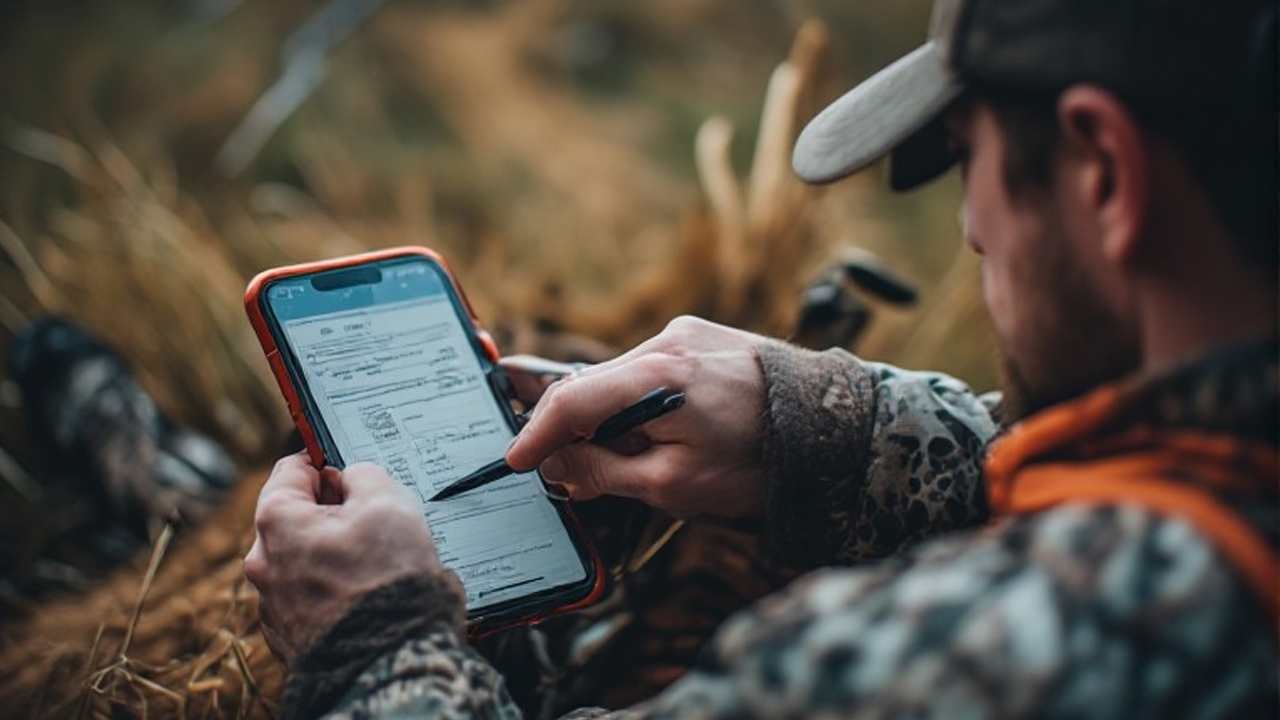
- [ ] Photograph your licence, tag and kill details on your phone the day of the hunt — date, Wildlife Management Unit, sex/age class of the animal
- [ ] Track your days afield per zone; effort data is a required field in ON, BC and AB
- [ ] Check the last season date for that species in your area — deadlines run from the season’s close, not your last hunt
- [ ] Log into your provincial licensing account (Hunt & Fish Ontario, WILD, Alberta RELM, HAL, Manitoba eLicensing) and look for the survey tab
- [ ] Answer honestly and precisely — inaccurate filings can trigger enforcement; “did not hunt” is a perfectly valid answer
- [ ] Screenshot the confirmation number every time
- [ ] Calendar the deadline the moment you buy the tag, not when the season ends
- [ ] Guided or non-resident? Confirm with your outfitter who files what — and if you’re booking guided hunts across provinces, add reporting obligations to your pre-trip questions, right alongside hunting insurance and licence verification
And keep your paperwork current: draw applications, tag purchases and renewals all funnel through the same accounts. Our Canadian hunting licence renewal dates resource helps you stack deadlines so nothing lapses mid-season.
Frequently Asked Questions
Do I have to file a hunter report if I didn’t shoot anything?
Yes, in most mandatory-reporting provinces. Ontario, British Columbia, Saskatchewan and Alberta all require licence holders to submit an activity or harvest filing even with zero participation or zero success. The “no harvest” data is just as valuable to biologists as kill data.
What happens if I miss the reporting deadline in Canada?
Consequences scale by province. Ontario adds a $25 surcharge to your next purchase for that species ($50 on a consecutive miss). Alberta adds $15 to your next wildlife certificate. British Columbia treats the miss as an offence and blocks all new licence, permit and draw applications until you comply. Unregistered kills in registration provinces can lead to fines.
How do I report a moose harvest in Ontario?
Moose tag holders file through their Hunt & Fish Ontario online account or by calling 1-800-288-1155, generally by December 29 after the season closes. Hunters whose tags came through a tourist outfitter have a separate, earlier obligation — return the outfitter’s copy within seven days of the season close, and complete the standard filing too.
Is harvest reporting the same in every Canadian province?
No — it’s one of the most fragmented systems in Canadian hunting. Quebec and the Maritimes lean on rapid kill registration; Western Canada and Ontario run licence-based activity reports; the territories tie filing to tag conditions and hunt-specific authorizations. Always verify against the current-year regulations for the exact jurisdiction where you hold tags.
Do non-resident hunters in Canada need to report harvests?
Often yes. Ontario non-residents hunting with outfitters return reports through the operator, while independent non-resident moose hunters with a relative’s tag file by the standard deadline. B.C. non-residents hunting under a guide follow the guide’s compulsory obligations. Confirm the chain of responsibility before your trip — a good outfitter will spell it out in your booking package.
Where can I find the official hunter reporting rules for my province?
Start with Ontario’s official hunter reporting page if you hunt in Ontario, or the B.C. government’s mandatory hunter reporting guide for British Columbia. Each provincial licensing portal posts its own current-year deadlines.

- Canada Hunting Youth Regulations 2026–2027: Age Requirements, Licences & Hunter Rules by Province - October 10, 2026
- Where to Hunt in Canada: Provinces, Species & Planning Guide - October 10, 2026
- Hunting Tags in Canada: Validation, Attachment and Transport Rules Every Hunter Must Know - October 5, 2026