
Canada Hunting Trespassing Laws Explained: Permitted Hunting Land & Access Rules for Every Province
In Canada, every province and territory requires the landowner’s permission before you hunt on private land, while Crown land is generally open to licensed hunters — but the rules for posted ground, occupied land, signage, and how you prove consent differ sharply from Alberta to Newfoundland and Labrador. Because trespass convictions can trigger fines, license suspensions, and even firearm seizures, smart hunters check land ownership before every trip using provincial land views, GPS mapping apps, and a straight conversation with the property owner. This guide breaks down the trespass statutes, permission rules, and step-by-step land-access checklists for all ten provinces and three territories, so you always know where you can legally hunt and how to confirm your right to be there.
Trespassing is the most common way hunters lose access to good ground in Canada, and it happens mostly by accident. The land looks abandoned, there is no fence, no sign, so you cross the creek and set up under the oaks. Then the owner shows up, and suddenly you are explaining yourself to a farmer who has already decided you are the problem. Here is the uncomfortable truth most pages skip: in several provinces, consent is required even when the land is unposted, and in Saskatchewan the law changed on January 1, 2022, to make landowner consent mandatory for nearly all recreational access — hunting included. A buddy of mine learned this the hard way in southern Manitoba when a perfectly polite morning on “empty” pasture ended with a court date and a fine that cost him more than his season’s tags. That is why this guide leans hard on the practical side: what each provincial statute actually says, how to check who owns the land before you walk in, and how to ask for permission in a way that usually gets a yes.
The One Rule That Applies Everywhere: Permission Before Property
No matter where your boots touch down, these universal principles hold across all thirteen jurisdictions:
- Private land always belongs to someone, even if it looks abandoned, unfenced, or unposted. Ownership never transfers just because the grass is tall.
- Permission must include intent. In Alberta, you must be clear that you intend to hunt and shoot, not just visit. Vague consent is worthless.
- Consent is personal. Permission for you does not extend to your hunting partner, your cousin, or the guy from the forum.
- Consent is revocable. The owner can tell you to leave at any time — and you have to leave, no debates.
- Signs are not required in most provinces. Many hunters assume “not posted = open.” In Ontario, Quebec, Saskatchewan, and others, that assumption gets people charged.
- Crown land is the default public hunting ground, but it has exceptions: leases, tenures, parks, wildlife reserves, and exclusive outfitter areas.
- Indigenous rights are separate from this framework. Treaty and Aboriginal harvesting rights continue to exist alongside provincial trespass rules.
Crown Land vs. Private Land: The Quick-Reference Split
| Land Type | Who Owns It | Hunting Access | What Hunters Must Do |
|---|---|---|---|
| Crown land (public) | Provincial or territorial government | Open to licensed hunters in most zones, minus parks, reserves, and special areas | Check zoning, season dates, and any tenures before hunting |
| Crown land under disposition | Leaseholder, rancher, or forestry company | Treated like private land | Get permission from the leaseholder or licensee |
| Private land | Individual or corporation | Only with owner, or occupant, permission | Ask first, confirm intent, keep it in writing if possible |
| Posted land | Anyone | Closed unless you have written or verbal consent | Respect the signs; signs mean the owner has already said no once |
| Settlement land (Yukon & Nunavut) | First Nations or Inuit organizations | Category A lands need Nation permission; some lands require non-member approval | Contact the local lands office or Nation before hunting |
| Municipal land | City or town | Usually closed to hunting | Check local bylaws — they supersede provincial rules within city limits |
Provincial Trespass Statutes at a Glance (All 13 Jurisdictions)
| Jurisdiction | Governing Law | Private Land & Hunting | Crown/Public Land Notes | What Makes It Different |
|---|---|---|---|---|
| Alberta | Petty Trespass Act; Wildlife Act | Permission required on occupied land; must declare hunting intent when asking | Crown land open to licensed hunters; some parcels held under dispositions | Land under lease or license is treated like private property — the lessee’s permission is the one that counts |
| British Columbia | Trespass Act (SBC 2018, c 3) | Entering without permission is trespass; posting is common but not mandatory | Much of the interior is working forest under tenures with separate access rules | Backcountry recreation on private forest land is allowed in many areas unless posted, but hunting still needs consent |
| Manitoba | Petty Trespasses Act | Hunting on private land without permission is an offence under wildlife law; trespass rules target enclosed land and people told to leave | Huge Crown tracts in the north are open to licensed hunters | The Wildlife Act makes unauthorized hunting access an offence even where the trespass act itself is narrower |
| New Brunswick | Trespass Act (SNB 1983, c T-11.2) | Consent required; recent updates put the duty on the visitor to find the owner and request access | Crown land open under provincial hunting rules | Responsibility flipped to the hunter — “I couldn’t find the owner” is not a defence anymore |
| Newfoundland and Labrador | Trespass legislation + hunting regulations | Hunters must have permission even when land is unposted | Most hunting happens on Crown land, open to licensed hunters | The conservation officer guidance is blunt: no signs does not mean no permission |
| Nova Scotia | Wildlife Act; Occupiers Liability Act | Posted land is closed; occupied or enclosed land requires permission | Extensive unposted backcountry is legally huntable per distance rules | A posted-land province — owners who want hunters out need proper signs in the right places |
| Ontario | Trespass to Property Act, R.S.O. 1990, c T.21 | Permission required; fines up to $10,000; cultivated land is always protected | Crown land north of the “French River line” is largely open to hunting | Land under cultivation is protected even without a single sign, and firing a rifle from it compounds the offence |
| Prince Edward Island | Trespass to Property Act | Consent is effectively mandatory since most of the Island is privately owned | Very little public hunting land exists | With about 90% of PEI in private hands, landowner relationships are the whole game |
| Quebec | Act respecting the conservation and development of wildlife (C-61.1) | The right to hunt does not grant land access; owner consent is mandatory | Structured access: ZECs, wildlife reserves, and outfitter territories | Permission is needed even along riverbanks above the high-water mark, and big tracts are leased to outfitters |
| Saskatchewan | The Trespass to Property Act (SS 2009, c T-20.2) | Consent — verbal or written — required for recreational access since January 1, 2022 | Crown land open under license rules; some community pastures need permits | Both provincial trespass and federal criminal-access concepts apply; one of the strictest regimes in the country |
| Northwest Territories | Trespass Act; Wildlife Act | Private parcels are rare and concentrated near communities — permission required there | Vast territorial Crown land is open to licensed hunters | Access is often logistical (fly-in, boat, winter road) rather than legal — planning is everything |
| Nunavut | Nunavut Land Claims Agreement framework; Wildlife Act | Inuit-owned and municipal lands need permission | Public land dominates, but harvest is community-centred | Non-residents face strict requirements, and local rules can close specific areas quickly |
| Yukon | Trespass Act; Commissioner’s land rules | Private land needs owner consent; Settlement A Land needs First Nation permission for non-members to harvest | Commissioner’s land is open Crown land under territorial rules | Category A vs. Category B Settlement Land changes who has to ask whom — check before you cross |
Posted Land, Signs, and “Occupied” Land: What Each Term Means
- Posted land: marked with signs (often red or yellow) naming the owner and banning entry or hunting. Posting is the owner’s way of saying no without a conversation.
- Occupied land: active residence, farmyard, or grazing land in current use. Almost every province treats occupied land as automatically protected.
- Cultivated land: ploughed, seeded, or cropped fields. Ontario explicitly shields these even without signs.
- Unoccupied unposted land: the grey zone. Provinces like Nova Scotia treat this more permissively, while Saskatchewan and Quebec do not — when in doubt, ask.
- Crown land designation: land may be closed by zoning, seasonal closures, or special management areas, so “it’s Crown land” is never a complete answer by itself.
How to Check Land Access Before You Hunt (Step by Step)
Follow this checklist before you load the truck — it takes fifteen minutes and it has saved me more boundary disputes than I can count:
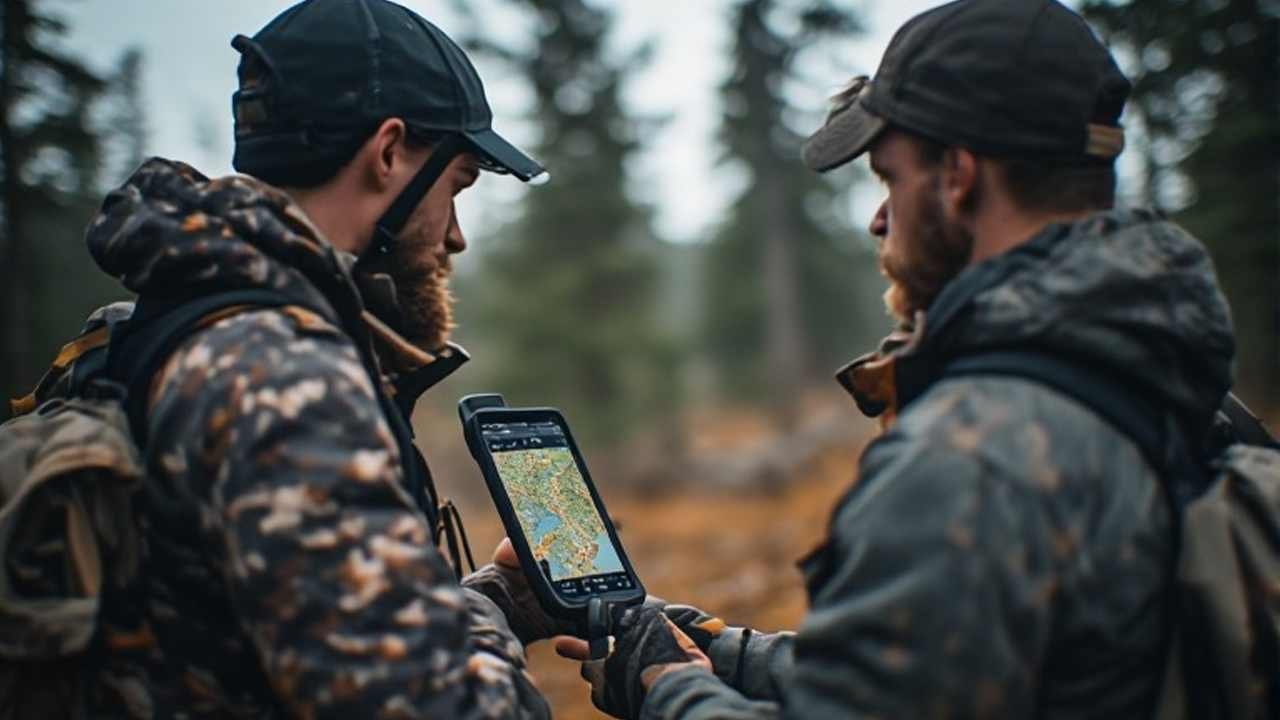
- Pull up a mapping app first. iHunter or onX-style GPS tools show property lines, landowner names where available, and Crown land boundaries so you can pin the exact parcel you plan to hunt.
- Switch to a provincial land viewer. Alberta’s My Wild Alberta, BC’s integrated land viewers, and Ontario’s Crown land mapping tools show dispositions, tenures, and closures that consumer apps miss.
- Check the county or RM assessment office. County taxation records are public in most provinces and give you the registered owner’s name for a permission call.
- Check hunting-zone overlays. Confirm the parcel actually sits inside an open zone for your target species, and cross-reference season dates before you invest any gas.
- Look for signs — twice. Drive the access road, walk the treeline, and look for faded staples on fence posts. Old signs still count if they are legible.
- Talk to neighbours. The farmer next door usually knows who owns the back forty, and a friendly introduction opens doors faster than any app.
- Respect the 24-hour rule of thumb. If you find a “by permission only” sign with a phone number, call well ahead of your hunt date — never the morning of.
How to Approach a Landowner for Hunting Permission
- Knock in person, not by email. Face-to-face at a reasonable hour beats voicemail every time.
- Introduce yourself and your vehicle. People remember a name and a truck; strangers are a liability.
- Name the animal, the dates, and the access route. General requests get general answers — usually no.
- Offer something real. A share of the harvest, help fixing fence, or a helping hand at haying season goes a long way in farm country.
- Accept the no gracefully. The owner remembers polite hunters and rude hunters; the polite ones get invited back when seasons change.
- Get it in writing when you can. A simple one-page permission note with dates and signatures protects both of you, and several provinces now make written records easier to enforce.
- Record the details. Date asked, who said yes, what was allowed — a phone note is better than a memory.
- Follow up afterward. A thank-you text and a couple of sausage links will have you welcomed back next fall.
For the full granular detail on consent rules by region, including which provinces accept verbal versus written permission, see the province-by-province private land permission rules — it pairs perfectly with this guide.
What Happens If You Trespass While Hunting
- Provincial fines: Ontario’s Trespass to Property Act allows fines up to $10,000 for individuals, and courts take aggravated trespass seriously; other provinces sit lower but the pattern is rising.
- Wildlife-act charges: hunting without permission can add separate wildlife offences on top of the trespass ticket — double the penalty for one mistake.
- Firearm and gear seizure: conservation officers routinely seize rifles, bows, and vehicles used in hunting trespass, and returning them is expensive and slow.
- License suspension and points: a conviction can suspend your hunting license for a season or longer, which is the real cost for an active hunter.
- Civil liability: under occupiers’ liability law, hunting on private land without permission strips you of much of the legal protection you would otherwise have if someone gets hurt on the hunt.
- Lifetime loss of access: word travels fast in rural Canada. One trespass burns the field for you and everyone who asks after you.
Indigenous Hunting Rights and Settlement Lands: A Fair-Warning Note
Provincial trespass statutes do not erase Indigenous harvesting rights, and the courts have been explicit that Treaty rights to hunt on Crown land persist where lands are not settled or occupied. The sharp practical edge is on settlement land in Yukon and Nunavut: on Category A Settlement Land, non-members generally need the First Nation’s permission before harvesting, while Category B land carries specific wildlife rights spelled out in the final agreements. Saskatchewan’s 2022 trespass changes also drew pushback from treaty-land sharing networks, which argued that requiring landowner consent burdens rights holders. If you hunt near settlement land, contact the local First Nation or Inuit lands office first — it is a short call and it keeps everyone on the right side of the law.
Frequently Asked Questions About Hunting Trespass in Canada
Do I need permission to hunt on private land if it isn’t posted?
Yes, in the overwhelming majority of provinces. Saskatchewan (since 2022), Quebec, Ontario, New Brunswick, and Newfoundland and Labrador all effectively require consent regardless of posting. Nova Scotia is the notable posted-land exception, where properly unposted backcountry is treated more permissively — but occupied or enclosed land always needs consent.
Can I hunt on Crown land without asking anyone?
Generally yes, provided you hold the correct license and tags and the parcel is not within a park, reserve, lease, or seasonal closure. Always verify the specific parcel, because Crown land under a grazing lease is treated like private land — the leaseholder’s permission is required.
What counts as valid permission: verbal or written?
Both count in most provinces, but written permission is far easier to prove. Saskatchewan’s modern regime accepts verbal consent yet carries such stiff penalties that a signed note is the prudent standard everywhere.
Are “No Trespassing” signs the only thing that keeps hunters off property?
No. In Ontario, cultivated land is protected with or without signs, and occupied land is protected across the country. Signs are the roughest form of consent law — the absence of a sign is never an invitation.
What is the fine for trespassing while hunting in Canada?
It varies wildly: Ontario allows up to $10,000 under provincial law, while petty trespass in some provinces starts in the low hundreds — but wildlife-act charges, gear seizures, and license suspensions routinely add up to far more than the ticket itself.
Do outfitters and guided hunts change the access rules?
Yes. Many outfitters hold exclusive licenses or leases over Crown land, which means their consent — usually built into your hunt package — is the permission that matters, and unguided hunters must stay out of those territories. Quebec’s outfitter model and BC’s tree farm licenses are the clearest examples.
Can I hunt on municipal or regional land?
Only if the municipality allows it by bylaw, and most do not. City bylaws supersede provincial rules inside municipal boundaries, so check the local government before you assume anything.
The Bottom Line
The golden thread running through all thirteen jurisdictions is simple: public land is the default, private land is by invitation, and posting is a courtesy, not a requirement. The provinces that flipped to mandatory consent — Saskatchewan most notably — did so because landowners were tired of being treated like obstacles, and every hunter pays for that shift. Build the habit now: verify the parcel, confirm the owner, ask cleanly, and record the answer. It keeps you legal, keeps you hunting, and keeps the next generation welcome at the farmhouse door.

- Hunting in Canada: The Pre-Season Checklist Most Hunters Forget - September 16, 2026
- Canada Wolf & Coyote Hunting Seasons 2026–2027: Dates by Province - September 16, 2026
- Alberta Hunting Season Dates 2026-2027 & Draw Deadlines - September 16, 2026